viernes, 14 de julio de 2017

Varanasi, The Holiest City


The closest I had ever been to the Ganges was on the Piazza Navona, contemplating Bernini's marvelous fountain, now I was about to dip my toes in this artery of the Indian subcontinent and holiest of holy rivers...or not. The paradigm of the occidental and the (Indian) oriental mind can not be better visualized than by their view and conception of the river Ganges. For the former a disgusting, green slimed, infested stream, its banks littered with waste and cow dung, it's pungent smell predominant and supplied by toxic upstream effluents and a high percentage of the 260 million Uttar Pradeshians domestic waste. For the latter a holy river, incarnation of a divinity with healing powers, used for purification and cleaning by submersion, mouthwashing and drinking, subject of tens of daily ceremonies, born in the Himalaya, home of the gods, and a privileged place to die and take a step towards the next life.

Antes de llegar a Varanasi, habíamos estado en la disyuntiva si terminar nuestro viaje de India visitando el Taj Mahal (Agra) o visitando Varanasi. La visa se me vencía y teníamos que decidirnos por un destino antes de tomar ese bus que nos sacaría de India y llevaría a la frontera con Nepal. Finalmente, por un tema de curiosidad y ver algo distinto a lo que ya habíamos visto, nos decidimos por Varanasi. Templos y Palacios habíamos visto en todo nuestro viaje por el Sudeste asiático e India, pero un lugar al que consideran sagrado y donde la gente decide ir a morir, era algo que probablemente no íbamos a volver a presenciar si es que no era estando en India. Llegamos a Varanasi por la tarde. La primera impresión que me dio fue la de una ciudad caótica, con mucho tráfico, basura en las calles y una extraña neblina grisácea que flotaba en todo el ambiente. Buscamos nuestro hospedaje, el cual quedaba cerca del río Ganges, lugar donde se realizan las cremaciones y donde todos desean ir a pasar sus últimos días de vida. 


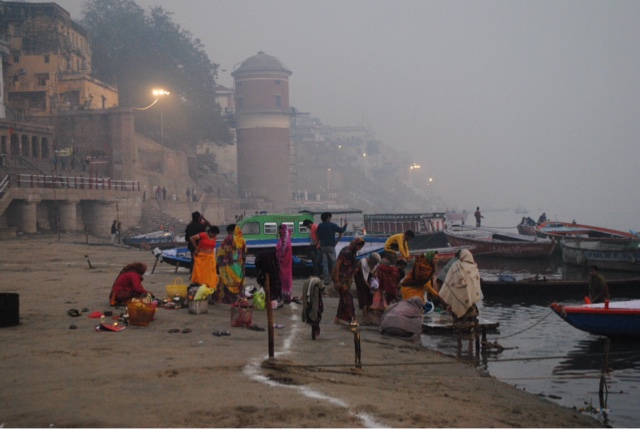
Running out of time on Belen's visa and with our next destination being Nepal, we had the choice between either Agra and the Taj Mahal or Varanasi. We decided to ignore the most supreme and splendid of the Mughal creations, put off by mass tourism, the supposedly omnipresent predatory touts and scammers and the higher probability of ever returning and opted for the most sacred Hindu place. We arrived, rocked by the rough and long train ride, in a simple guesthouse run by an incredible Indian family, and against our usual routine but to give Belen's stomach and my lack of appetite a bit of a break, we went for an evening in the guesthouse. The next morning I went for the dawn ceremony on the Assi Ghat where offerings were made and rituals devoted to mother Ganges and some traditional music was played, before diving in bed for another few hours. The Ghats that line the banks of the Ganges in Varanasi are stone steps that lead to the river and where people bath, wash clothes, do ceremonies, wash their buffaloes, or simply walk, play music, sit and chat. As opposed to what I expected, the Ghats were a rather quiet and peaceful place, that apart from the occasional smell and filth, made for a relaxing and interesting walk, again revealing a wide variety of colors of the infinite palette, that is India.


La primera tarde solo nos instalamos y salimos a dar una pequeña caminata, regresando temprano a nuestro Guesthouse ya que yo andaba con malestares estomacales y Johan extrañamente había perdido el apetito. Nos hicimos unas sopas de sobre y nos acostamos temprano. A la mañana siguiente fuimos a recorrer la orilla del río Ganges y pasamos por los diferentes "Gates" donde se practican distintos rituales. El ritual más famoso que ocurre en este lugar, son las cremaciones. Como dije anteriormente, en India todos quieren venir a morir al río Ganges pues lo consideran sagrado. Por tal motivo, es normal que cuando paseas por las orillas del río, encuentras a tu paso ancianos tirados en el piso, gente enferma que viene a pasar sus últimos días al lado del río. Más de una vez mientras caminábamos al lado del río vimos gente recostada en el piso que verdaderamente no sabíamos si solo estaban descansando o si eran cuerpos sin vida. Cuerpos donde hay más hueso que carne, piel tostada por el sol, piel cuarteada y con llagas. Sin embargo la gente actúa de lo más normal, todos siguen con su camino, nadie se para a ver si aquellos cuerpos inmóviles respiran o no. 
Es decir, Varanasi era una mezcla de gente, basura que flota en río, vacas y bueyes que se pasean por la orilla del río buscando entre la basura algo que comer, rituales que se hacen a los dioses con ofrendas de flores, inciensos, bailes y fuego.


Well known, and one of the obvious highlights (if to be called like that) are the cremation Ghats, where the bodies of the deceased are cremated according to Hindu rituals. We saw a first introduction in the smaller Harachindhra Ghat, where one or at most 2 bodies at the time are cremated. Then, we got to the main cremation Ghat, where a new body, draped in orange and gold clothes, would arrive every 10 minutes. After being dipped in the Ganges for a last bath, the body was then put on a wooden pile, to become the cremation pyre, lighted with the corresponding rituals. Due to the now deforested area, the wood is shipped in, and each cremation is done according to the means of each person, considering the amount of wood, the type of wood, sandalwood being the most expensive, and the essences used during the ceremony. The scene was otherworldly, disgusting and intriguing at the same time. Disgusting because all the filth on the river banks, corpses burning while people fuel the pyres bare feet and with barely any protection, in between the cows eating whatever they find and people walking and hanging around chit chatting a bit. Intriguing because of being present so openly in Hinduisms holiest place, rituals so different from ours but also the lack of serenity, privacy and sadness, considering the death person ends his life in the most desirable place and is ready to be reborn again.


Para mí fue bastante "especial" la visita a Varanasi, fue uno de los lugares más extraños en los que he estado y donde no he podido conectar con el ambiente. Quizá no era necesario que conecte con el ambiente, a veces solo llegamos a lugares para conocer y aprender que existen cosas que van más allá de nuestro entendimiento, que no solo nuestro mundo es el que existe, que existen muchas más costumbres y culturas de las que nos han enseñado y que justamente eso, lo diferente y variado que pueden ser las personas y culturas alrededor del mundo, es lo que hace de este mundo un lugar maravilloso y el cual vale la pena salir a explorar. 
Y bueno, estando en Varanasi fuimos a presenciar el ritual más importan que se lleva a cabo en la orilla del río sagrado, las cremaciones. 
Llegamos al sitio donde se estaba haciendo una de las cremaciones, pudimos notarlo por la cantidad de gente que había aglomerada y claro, el humo que salía. El olor es ... especial, claramente no es un humo normal el que se huele, a eso hay que sumarle el olor de la caca de vacas que está por todos lados, caca de cabras, y la basura en el río. Estando ya en el lugar donde se practican las cremaciones, nos detuvimos a observar cómo es que se realizaban. Llegaban los cuerpos envueltos en mantas de color blanco, naranjas y algunos con cintas doradas. Los cuerpos eran cargados por 4 o 6 personas que estaban rodeadas de más gente que iban cargando pilas de madera, Flores e incienso. Una vez que bajaban el cuerpo por las escaleras a orillas del río, lo sumergían en el río por unos segundos, posteriormente lo ponían sobre la pila de maderas, lo cubrían con más maderas y prendían fuego. Familiares y amigos del fallecido permanecían alrededor del cuerpo hasta esperar que se hiciera cenizas, o mejor dicho a esperar hasta que se termine de consumir toda la madera, ya que algunas veces la madera se consumía antes que el cuerpo, teniendo que lanzar al río los restos del cuerpo que no finalizaron el proceso de cremación. 


The next day we watched the morning ceremonies to worship mother Ganges again and then went on a boat ride to see the activity in the ghats from the riverside. First, we would see people praying, washing themselves, washing clothes and exercising and all of a sudden we were covered in a dense fog, not seeing anything but just hearing all the sounds of early morning Ganges activity. I had a vision of our small boat capsizing and having to swim in between the filth and semi burned limbs to a river bank we couldn't even see and then I pictured where Ovid and Virgil must have gotten their inspiration to write about the river Styx in their classical masterpieces. I must say that every place we travel I discover new things and things for later when we come back, but Varanasi is probably the only place on all our travels where I wouldn't come back. I probably didn't capture the historical spirit of Varanasi, or Benares, properly as it is one of India's oldest cities. I didn't hate the city, but we came there for the experience of seeing the place and its life but there is no need in going back. So in the afternoon we boarded our last Indian train and headed north towards Gorakhpur, where we spent the night and left early for the Nepali border. After what must have been one of the quickest, easiest and most transparent border crossings we walked out of India and set foot in the Himalayan kingdom for new adventures.


El segundo día nos despertamos tipo 5 de la mañana para presenciar el ritual dedicado a los dioses, que se lleva a cabo a orillas del río. Había mucha neblina, y humo... Siempre hay humo ya que las cremaciones se llevan a cabo las 24 horas del día, siempre hay cuerpos cremandose. El ritual consistía en unos cuantos cantos, rezos, bailes con antorchas de fuego, arreglos florales, música, velas, sonido de campanitas que indicaban el término de un ritual y también el inicio de otro. Al finalizar los rituales, subimos a un bote y empezó nuestro paseo por el río Ganges. Para algunos quizá ya hubiese sido suficiente ver el río desde la orilla, pero la vista que obtienes desde el río hacia la cuidad es interesante. A nosotros nos parecía interesante ver lo mismo, pero de distintos ángulos. Una vez a bordo del bote, empezamos a andar envueltos en una neblina que no nos permitía ver a más allá de un metro. El agua del río era oscura, claramente no veías lo que había abajo. De vez en cuando se acercaban gaviotas y se ponían a revolotear a nuestro alrededor mientras el muchacho que conducía nuestro bote le tiraba un poco de pan al río. Desde el bote, observamos gente que desde muy temprano salen a lavar ropa, otros bañándose enteros en el río...hasta con jabón y shampoo llegaban al río, otros rezando a orillas del río, otros empujando a sus bueyes para darles también un baño y quitarles la tierra y excremento, otros curiosamente lavándose los dientes, mientras todo esto ocurre en un tramo de 200 metros... A 2 metros en el mismo lugar, empiezan a prender fuego a los cuerpos embalsamados. 


India made all its promises true and proved to be incredible. We took 22 trains, saw 3 oceans meet, set foot in 12 provinces, heard 10 different languages in the same country, spent 70 days, visited places of worship of 6 religions, were hot and freezing, went through a rainbow of emotions and I can say, I think we got through the skin of India. We cut that superficial layer of a quick visit, just to discover the many layers below which require many more visits to get through, if ever. India with the ancient and the modern, the beauty and the ugliness, the rich and the poor, the relaxing and the frustrating but never boring, never alone. We can look back at yet another unforgettable adventure and we thank the pantheon of gods residing on this fascinating subcontinent for our safe and healthy travels through its main and back roads.


Varanasi fue nuestro último lugar visitado en India. Quizá no es el que recordaré con nostalgia, pero si es el lugar más extraño en el que he estado y el que me hizo entender que el mundo es como una caja de sorpresas, en la que cada país tiene algo distinto que mostrarte, algo que enseñarte, hacerte entender que la realidad que vives no es la única que existe, que si pudieses verte desde lo alto, te darías cuenta de lo pequeño que eres y poco que sabes muchas veces en relación a otras culturas. India fue una experiencia especial, una mezcla de emociones todos los días, sentimientos encontrados. 
No recomendaría venir a India "de vacaciones" a relajarse... Porque claramente no descansas nada, es un país que te consume, gastas mucha energía, necesitas tiempo para acostumbrarte, entender, observar, asimilar y procesar lo que vas viendo todos los días. Pero lo que sí, por lo menos una vez en la vida, debes visitar India. Es uno de esos lugares únicos en el planeta. 
Yo volvería. Aún nos quedo mucho territorio sin descubrir y explorar.
Gracias India por tus colores, por tus sonrisas, por tu gente generosa, por tu curiosidad frente al extranjero, por mostrarnos la cruda realidad que pasan algunas personas, por hacernos tomar conciencia de lo que es un país con pobreza extrema y valorar lo que uno tiene y muchas no sabes apreciar. Llego el momento de decir adiós a India, subimos a un bus que nos llevaría a la frontera con Nepal, donde empezaríamos nuestra próxima aventura en el país del Himalaya. 


domingo, 9 de julio de 2017

Visit to the Temple of the Rats, Bikaner


At midnight we boarded our train, installed ourselves in what now had become a ritual (sleeping mats and bags, warm clothes, lock on backpack, shoes tied to the ceiling fan and a bottle of water near) and laid to sleep to wake up in another Rajasthani town, Bikaner. Only, when waking up at 7.30 in an almost empty, standing train and looking at the platform and station, which was suspiciously similar to the one of the night before, I found out we were still in Jaisalmer and our train had been cancelled. After this night of complimentary lodging by Indian Railways, we packed our bags and headed for the bus station for a long bus trip. Although an arduous journey on 2 different state run buses, the trip was a unique insight in the non touristy villages, the ethnography and the costumes of the Rajasthani desert folk. For me the most unforgettable images were the elderly man in white loose clothes, elegant sleeveless blazers, colorful and meticulously wound turbans, pointy decorated shoes, weathered faces with heavy mustaches, large golden earrings often presents from their fathers, a leather coated walking stick, the unmistakable mouthful of paan (betelnut) or the chillum (clay pipe) occasionally with a bit of hash. This is one of the beautiful things in India, you pay to travel geographically and you travel in time for free.


Al llegar a la estacion de trenes, ubicamos nuestro vagón, nos instalamos y nos quedamos dormidos. La sorpresa fue al día siguiente temprano cuando despertamos y nos damos cuenta que el tren estaba completamente vacío, estábamos solo nosotros en el tren, y al salir del tren, vemos que nunca habíamos salido de estación de Jaisalmer, seguíamos en la misma estación. Se había cancelado el tren, y nadie dijo nada, algunos también se habían quedado dormidos en el tren en otros vagones, y al igual que nosotros despertaron a la mañana siguiente esperando bajarse en Bikaner, pero dándose cuenta que seguían en Jaisalmer. No me sorprende, así es India. Increíble! 
En fin, nos toco bajar nuestras mochilas del tren, tomar un tuk tuk a la estación de buses, y subirnos al primer bus que nos acercara a Bikaner. 


Finally arriving in Bikaner, we lodged in another traditional haveli homestay where we had dinner in a communal area prepared by the family. I went for a nightly walk in the small streets of the old town, where as opposed to Jaisalmer, many of the old decorated houses where in different degrees of disrepair and the streets where certainly more dirty, still, it gave me a bit more of an authentic feel and I just enjoyed walking through the bazaars and lanes, where people instead of herding you into a travel agent in exchange for a commission on your camel tour call you into the tea shops in exchange for a genuine round of questioning by the rare English speaker for the rest of the public. In another daily walk with Belen through this city, we couldn't share the same excitement for this place but then again different views on different places makes traveling together all the better. 


Una ves en Bikaner, ubicamos nuestro hospedaje que consistía en una casa antigua tradicional donde después de darme un baño de agua caliente y ponerme ropa limpia y abrigadora, decidí sentarme en el patio interior decorado con cojines de colores, máscaras en los muros, cortinas colorinches, me senté a relajarme un rato, leer mi libro y escribir en el blog, mientras Johan fue a dar un paseo por la ciudad. Al día siguiente tomamos un bus con destino al Templo Kami Mata, que es nada más y nada menos que el templo de las ratas. Como ya saben en India, tienen creencias y costumbres muy distintas a las que nosotros estamos acostumbrados. Tienen varios dioses, muchos de ellos personificados en cuerpo de animales como Ganesha (el elefante) por ejemplo, y en Bikaner, construyeron un templo dedicado a las ratas. Una de las leyendas cuenta que una princesa en la India, a la que le mataron al hijo en una batalla, rezo a los dioses para que por favor, le devuelvan a su hijo de la muerte. Las suplicase de la princesa fueron escuchadas, pero la forma en que su hijo regreso no la misma, el hijo regreso a su madre pero transformado en rata. Por tal motivo, es que la princesa decide hacer ese "Palacio" para las ratas, actualmente es un templo al que muchos Hindu van a realizar ofrendas en gesto de agradecimiento por algún deseo concedido. 


The main reason for coming to Bikaner was a visit to the Kami Mata temple in Deshnok, which we reached after a short bus ride joined by desert people in the bus and camel carts loaded with bricks, baked in cow dung fueled ovens, on the street. Having read to different legends about the temple I am not sure which is the correct one, but the bottom line is that some people reincarnated as rats and are revered in this temple. After leaving shoes and socks in a cloak room, you enter the temple barefoot, populated by thousands of rats. The rats are being made offerings in the form of milk, sweets and even whisky, from devote pilgrims and are scrunging and munching all over the place, accompanied by their nervous running, vicious fighting and high peeping. The pictures speak for themselves but 2 anecdotes have to be mentioned. While taking a photograph, a young girl approached me offering one of the local sweets from a box. She had come to the temple to thank the goddess Kami Mata, that she passed her exams, and offered some sweets to the inhabitants in return. I was then offered one of the remnants. Then, apart from having a rat running over your feet, which brings moderately good luck, best of luck would come when you could spot one of the few white rats. So from time to time a scream would come, followed by a run and a scrum. On the third time we decided to get our dose of good luck and, battle hardened after almost 3 months in India and without the least remorse, dived in the scrum, using elbows, feet, hands and most importantly the incredible capacity of sticking your head in the smallest possible hole, I spotted my white rat. We bussed back into Bikaner and digested this utterly strange experience with a delicious Rajasthani curry, hot naan bread and a cumin loaded glass of buttermilk. Then, again another train was waiting for us to take us to Delhi where we finally picked up Belen's new passport before setting off the same day on yet another night train to the holy city of Benares or Varanasi. This train ride, through India's most populated province of Uttar Pradesh, packed to the roof, leaving with a 5 hour delay and further technical problems on the trip, left us exhausted and 12 hours late on the, some say holy others say filthy, banks of the river Ganges.


Al llegar al lugar, nos percatamos de la gran cantidad de gente (como en todo India), que había haciendo fila para ingresar al templo de las ratas. De echo, eran el 98% gente local que llegaba con ofrendas de dulces para los habitantes del templo, y el 2% restante éramos unos cuentos turistas curiosos y valientes que se atrevían a ingresar descalzos al templo de las ratas. 
Habiendo dejado nuestros zapatos en la puerta del templo, al ingresar y cruzar un pasillo, llegamos a un patio interior donde ya podías observar gran cantidad de ratas corriendo por todo el patio, persiguiéndose entre ellas, peleándose algunas por un pedazo de comida, otras durmiendo en las esquinas de los muros, otras corriendo y pasando sobre los pies de los visitantes, algunos no podíamos evitar dar un pequeño grito de susto, otros en cambio no daban ninguna reacción de sobresalto y al contrario actuaban de lo más normal posible, como si estuviesen visitando a familiares. Algunos niños sentados y acostados en el piso jugando con algunas de las ratas, algunas señoras arrodilladas rezando y dando gracias por algo concedido. Platos con leche en cada esquina, cáscaras de fruta, dulces en el piso, orina de rata que al mezclarse con el dulce dejaban el piso medio pegajoso. La sensación no era lo más agradable, pero una vez más pudimos ser parte de una experiencia de una cultura tan distinta la nuestra, que es lo que lo hace interesante. Después de la visita al templo, regresamos a nuestro hospedaje, recogimos nuestras mochilas y salimos con destino a la estación de trenes con destino a Varanasi, haciendo una parada de algunas horas en Delhi solo para retirar mi nuevo pasaporte, y de ahí continuar viaje a la ciudad a orilla del famoso río Ganges. 


Expedition in the Thar Desert, Jaisalmer


Our night train was full of military personnel on exercise in the desert area and so we had a short night accompanied by a friendly elderly French couple, curious junior army men and snoring mustachioed sergeants and colonels. We arrived before dawn in Jaisalmer and left the station walking, watching the spectacular sunrise illuminating this desert fort. Jaisalmer was again founded by another Rajput as a city on a hill in the dessert, and also served as a stop on the silk route when this southern route through India and Pakistan was preferable due to the geopolitical situation or bandits on the more northern routes. The city became rich due to the trade and through flow in spices, textiles and opium, giving travellers, merchants and camels alike a welcome break in the Thar desert. One of the particularities of Jaisalmer is that the fort is still inhabited, it is in fact a residential area, and as such we found ourselves climbing through 4 elephant proof gates to the walled city where our guesthouse was in a tower on the walls. The afternoon we spent taking in desert views from the walls and strolling through the maze of the old city below, lined with majestic havelis, meticulously sculpted merchant houses, and congested with cows and bulls.


Llegamos a Jaisalmer temprano por la mañana, después de nuestra larga jornada nocturna en tren. Al menos no fue tan terrible como otras noches en los trenes de India. En nuestro vagón iba una pareja de franceses, nosotros y el resto eran militares en servicio que iban a hacer sus ejercicios al desierto. Por tal motivo, me sentía segura en el tren. Además que Johan invitó te y galletas a los militares de los camarotes de alrededor, por lo que la mayoría nos miraba con una sonrisa en la cara. De la estación de trenes en Jaisalmer, nos toco caminar hacia nuestro hospedaje, ya que no habían taxis en la calle, ni buses. Recuerdo que aún estaba oscuro, no había amanecido aún, deben haber sido las 5:30 de la mañana y estaba frío. Al acercarnos a la ciudad amurallada, la ciudad de Jaisalmer, ya empezaba a amanecer, por lo que pudimos disfrutar del sunrise mientras ingresábamos a la ciudad antigua. Jaisalmer es conocida como la "Ciudad Dorada", y es porque los ladrillos que usaron para la construcción del fuerte y casas alrededor, es de ese color y que al amanecer o atardecer con los rayos de sol, se intensifica el color dorado. Es muy lindo. Ingresamos por las puertas de la ciudad amurallada, cruzamos una puerta alta de madera, que era por donde antiguamente ingresaban los reyes en sus elefantes. Al llegar a nuestro hospedaje, que por cierto quedaba en el interior del fuerte, decidimos descansar un poco en la terraza, aprovechando los primeros rayos de sol, para calentar el cuerpo. Después salimos a dar un paseo por la ciudad, apreciando todas esas callecitas estrechas, casas con balcones tallados, mercados, gente en vestidos coloridos y vistas del desierto desde puntos altos de la ciudad. 


Early the next morning we embarked on our camel safari, something that only by the name of it I refused to do but where the line in our Lonely Planet "the closest you will ever come to traveling in an ancient camel caravan" quickly changed my mind. We opted for a slightly upscale tour operator, first to not suffer cold in the desert nights and second because they were managed and operated by local desert people and as such had a permit to a part of the desert where most other operators wouldn't be allowed. This proved to be an excellent choice and after sunrise and tea, I sat wobbling on Desert King, admiring my early morning silhouette on the barren desert soil. Our trip was going to be in the Thar desert, covering areas in India and Pakistan, and the most densely populated desert in the world. The desert is inhabited by incredibly colorful desert people, women covered in beautiful saris and nose jewelry, while the men go with impressive turbans, pointy shoes, golden earrings and moustaches. After thumping for 2 hours through a relatively developed desert area, covered in arable land and wind turbines, and an increasing agony from sitting legs spread, we had a lunch stop under a tree in the desert. All our food during the 3 days was prepared on small wood fires made on the scarce fire wood collected in the surroundings and had a distinctive wood fire taste in the freshly made flatbreads, making for delicious meals.


Uno de los motivos por los que Johan quería conocer la zona del desierto de Jaisalmer era por la expedición que podías hacer en camello internándote en el desierto de Thar. Mi posición en el inicio era un rotundo "NO", yo no quiero hacer ningún tipo de actividad turística que implique el uso de animales, pues eso significa "maltrato de los mismos" y yo me opongo a eso. Johan, igual es Pro animales, pero no tanto como yo... Y uno de sus sueños era justo eso, hacer el Safari en camellos por el desierto. Después de leer un varios blog de viajes, averiguar en agencias de internet, leer en guías de viaje, cambie mi opinión respecto a este tipo de actividad en esta zona. Antiguamente los camellos han sido utilizados como transporte de gente y productos a lo largo del desierto. Ellos pertenecen a ese habitad, y la gente que los tenía cuidaba de ellos, por el mismo hecho de que los usaban como medio de transporte. Actualmente con la llegada de las camionetas 4x4 y camiones, los camellos no se usan más como medio de transporte, y lamentablemente hay muchos que mueren en el desierto de hambre, ya que nadie cuida de ellos ni los protegen. Existen algunos camellos salvajes que andan por ahí corriendo en el desierto pero que no debe ser fácil la sobre vivencia en una zona tan desolada sin la ayuda y cuidado de humanos. Gracias a las excursiones de Safari es que pueden continuar siendo útiles estos camellos para algunas personas y no son abandonados a su suerte en el desierto. Nosotros elegimos una empresa que figuraba como la numero uno en las guías de viaje, blogs e Internet. Verdaderamente quede contenta con la empresa que elegimos, pues pude presenciar y confirmar que el trato que le daba a los camellos era bueno, los alimentaban apropiadamente, les daban agua cada cierto tramo, parábamos a descansar bajo sombra de árboles cada 2 o 3 horas de haber estado andando e incluso los guías y dueños de los camellos, les hablaban a sus camellos y acariciaban. 


Maybe the most beautiful part of the trip was the sleeping in the desert, in the sand dunes on a simple mattress, covered in thick blankets, millions of stars and the rising moon. We woke up from the sound of the wind and the birds and watched the sun rise over the desert from under the blankets with hot sweet desert tea. The peace of these moments and the beauty of the surroundings filled me with joy and gratitude for these unique moments and made me realize that this is one of the things I most enjoy and value in life, being out and about. While I have done this many times every time is special and this time was even more special as I could share it with the person I love and my soulmate in travel. The second day, the desert became more desolate and beautiful and the wind a bit stronger and we wrapped up in shawls and turbans, protecting ourselves from sand, sun and wind and we enjoyed the splendor of the desert from our camels. Unfortunately, Belen struggled with a bad stomach in the morning but instead of abandoning, covered some of the distance walking along the desert man, and recovered during the lunch break with a nap and cups of hot strong black tea. After 2 nights in the desert and 3 days on the back of a camel, also this trip came to an end, but I could look back to an incredible experience and wouldn't doubt to come back for longer expeditions, as the peace of mind I found was much more profound than after one week attempts of meditation in an ashram.


Recuerdo que el primer día, me toco subir a un camello que era bastante alto, al inicio me daba un poco de nervios estar ahí arriba y depender del comportamiento de ese animal tan grande en el que yo estaba sentada en el lomo. No es muy cómodo que digamos, después de 40 minutos ya empieza a dolerte las piernas, la entrepierna y la espalda baja, pero todo eso es compensado con el hecho de estar compartiendo tu tiempo con esos animales tan extraordinarios, era como retroceder en el tiempo como cuando la gente se movía de pueblo a pueblo en camellos. Nuestros guías se encargaron de hacer una experiencia única, fueron muy amables, y estuvieron siempre pendientes de que estuviésemos bien nosotros y los camellos. Cocinaron típica comida Hindu del desierto, currys, panes hechos por ellos mismos, te, papa hervida, vegetales cocidos. Los atardeceres eran mágicos, estar ahí en el desierto, en un lugar tan alejados del resto del mundo, donde eres tú y la naturaleza. Disfrutar de una noche llena de estrellas, dormir al intemperie escuchando los sonidos de los camellos que dormían a 50 metros de nosotros y hacían de guardianes. Disfrute la expedición, aunque al segundo día amanecí con diarrea y vómitos, debe haber sido de insolación... Me sentía fastidiada, pero no mal. Solo un poco débil, por lo que decidí continuar con la expedición pero preferí caminar en vez de subirme al camello ya que el movimiento sobre el camello me producía más nauseas y me removía el estomago. Después de varios te cargados preparados por los guía, que cuidaron de mí y estuvieron siempre pendientes, me repuse y pude continuar la segunda parte del día montada en mi camello. 


On our way to Jaisalmer we stopped in one of the desert villages as per suggestion of our guide. I was somewhere suspecting a few souvenir stalls, but was surprised to walk in one of his friends mud brick houses, where 3 families slept in one room in winter and on the courtyard in summer. A cup of goat milk tea was prepared on a cow dung fire and we were shown around in the local 3 class room school, which was a private initiative from the villagers in response to the much bigger government school, where teachers would rarely show up and where the quality of education was so poor even this humble desert farmers decided to put their own savings in giving their children better prospects, where a government should be the main provider. After a good shower and a half chicken cooked in a tandoor (clay oven) with raw onion, green chili and lemon salad and naan bread dripping with ghee (clarified butter), I couldn't resist a nightly walk along the 89 illuminated tower bastions of the Jaisalmer fort before catching a train to Bikaner. 


Fueron tres días de Safari en el desierto con dos noches durmiendo bajo las estrellas. El último día partimos temprano de regreso a Jaisalmer, donde llegamos a un hotel que nos ofrecía gratis la misma empresa de safaris, en el que pudimos tomar una buena ducha, sacarnos la arena que teníamos hasta en las orejas, cambiarnos  de ropa que estaba impregnada a Camello y humo, y salimos a dar una última vuelta por la ciudad antigua. Por la noche teníamos un tren con destino a Bikaner, una ves más un tren nocturno. 


domingo, 2 de julio de 2017

Jodpur, the Blue City of India


And so we arrived after a second consecutive cold nightly train ride, again in Rajasthan in the city of Jodhpur, also called the Blue city. Traditionally, the Brahmin or upper priest caste painted their houses in blue to, firstly distinguish themselves from the other castes and then as heat regulation and insect repellant. Then, other castes started copying this tradition giving the city its distinctive indigo based blue. While I read about the caste system with its 4 hierarchical castes plus the untouchables, and while constitutionally untouchability has been abolished, I still do not fully grasp the caste system and its impact on today's society where it is still very much alive. I have heard and read about resentment against Brahmins, the mustachioed men on the street will proudly declare themselves as Rajputs, a warrior subcaste, sweepers on the street all have the same physical features and huge shares of (profitable) government jobs are reserved to the untouchables, much as South African Black Empowerment laws. While the caste system has undergone transformations, some of it is still alive and shapes contemporary Indian society to a degree. Although it must not be forgotten that today some Brahmins live in poverty and untouchables have successful careers in India's IT sector.


Después de una fría y larga noche de tren, llegamos a Jodpur... conocida como "La Ciudad azul". De la estación de trenes nos toco caminar hacia nuestro Guesthouse, cruzamos la ciudad, pasando por calles estrechas, mercados, puestos de te, puestos de leche caliente, tiendas de brazaletes, tiendas de souvenirs, varios puestos de costureros, puestos donde habían unas sartenes gigantes donde se freían una especie de masa que terminaba siendo como una galleta frita caliente para pasar el frío. Era invierno, así que en la calle encontrabas todo tipo de bebidas calientes y comida caliente, dulces y fritangas. 
Al llegar a nuestro hospedaje, nos dimos con la grata sorpresa de que se trataba de una antigua casa remodelada, decorada con máscaras, telas y adornos que la hacían muy acogedora y agradable. Teníamos una terraza desde donde teníamos una linda vista de la ciudad de Jodpur, y podíamos entender por qué se le llamaba La Ciudad Azul. Todos los techos de las casas habían sido pintados en un color azulino, y esto le daba un aspecto especial a la ciudad. Antiguamente solo pintaban las casas en color azul los Brahmanes, para distinguirse entre los demás... Más tarde todos los demás, empezaron a pintar sus casas en el mismo tono azulino, y hoy se puede apreciar desde cualquier punto alto de la ciudad, como luce Jodpur con todas sus casitas azules. 


We spent our first morning with a long breakfast, soaking up the winter sun on the guesthouse rooftop revealing all the splendor and magic of ancient Jodhpur, with the clear sky, the magnificent castle rising on the steep rock walls and towering over the city and the blue haze of the city waking up. Our guesthouse was run by 2 brothers and was the most beautifully decorated place we had been so far. An old Rajasthani's merchant house, decorated with Rajasthani sculptures, armory and textile and with cozy, comfortable, warm bedrooms. We had come a long way from the s***holes of the less visited central India. After our morning sunbathing and city gazing session, we set off for a long walk without a purpose through the old city, covering a few viewpoints and the features of the ancient city such as the clock tower, the bazaars, the water reservoirs, the city gates and the step wells. I started to feel farther away from the Hindu impregnated, bell ringing, temple cities of South India and closer and closer to the Middle East. Temples were less predominant, smaller and more modest, a distinct desert trading character reigns and more turbans and desert robes are seen. Nevertheless, the Rajput dynasties that constructed the forts and made these city states big, were devout Hindus and still are.


Después de darnos una buena ducha caliente, tomar desayuno en la terraza, salimos a recorrer la ciudad, sin ningún interés en particular... Solo caminar, perdernos por las calles de Jodpur, y ver con que nos encontrábamos. 
Jodpur, es una ciudad antigua llena de callecitas estrechas, caminos en piedra, casas con balcones de madera, perros, gatos, ardillas, monos y muchas palomas en las calles. Una vez más, llamó mi atención la vestimenta de las mujeres, con esos vestidos y velos coloridos, una mezcla de colores que no cualquiera se atrevería a usar, pero que son una verdadera fiesta de color para los ojos de los espectadores. Los hombres con una túnica blanca y turbantes naranjas no se quedaban atrás si de poner color en las calles de trata. Después de recorrer la ciudad, hicimos un descanso en un café que encontramos frente a un mercadillo que se formaba en la plaza central. Por la tarde nos juntamos con Mohit, un muchacho Hindu que conoció Johan en el tren e intercambiaron números telefónicos para luego poder juntarnos. Con Mohit, hicimos un tour gastronómico callejero. Yo al inicio un poco cautelosa de no comer en carretillas de la calle, por temor a enfermarme... Pero luego de probar el primer bocado del exquisito platillo que nos alcanzó Mohit, di rienda suelta a mi hambre voraz y probé y disfrute TODO lo que Mohit nos ofrecía. Después del tour culinario, nuestro amigo nos llevó a conocer una feria que se armaba todas las noches y donde encontrabas de todo, comida, ropa, souvenirs, juegos mecánicos. Mohit, muy entusiasmado nos invita a subirnos con él en uno de los juegos mecánicos que al inicio con Johan no estábamos muy convencidos de subirnos, pues no confiamos en la seguridad de estos aparatos y estábamos tan llenos con todo lo que habíamos comido, que no nos parecía buena idea. Pero no pudimos decir que no ante el entusiasmo de este chico universitario al que le brillaban los ojos al mencionar las canastas voladoras. Y así terminamos sentados en una de esas canastas que daban vueltas en lo alto, mientras escuchábamos las tuercas y fierros rechinar con cada movimiento, Johan pálido mirando hacia abajo con una sonrisa nerviosa, yo agarrándole fuerte de mi asiento para evitar salir volando y rezándole a mi ángel de la guarda que no me deje morir en un juego mecánico, y Mohit, con sonrisa de oreja a oreja intentando sacar selfies de los tres y riéndose de nuestras caras de susto. Para finalizar la noche, terminamos en una lechería, sentados tomando un vaso de leche bien caliente antes de irnos a acostar. 


In the evening we met up with Mohit, a graduating mechanical engineer and a Jodpur resident, who we met on the train and had given us a few directions, for a B-side and street food tour of Jodhpur. We got a tuktuk out of the old city and into the modern part were we met up on a roundabout lined with street food stalls. Having skipped lunch after a late breakfast, we attacked the street food as hungry wolves, garlic bread and a spicy tomato curry (Phav Baji), deep fried dough stuffed with spicy potato mash and then filled with different tastes of soups such as garlic, coriander, tamarind (Pani Puri), a vegetable and rice dish (Pulloa), South Indian dosa all in carefully selected street carts. Mohit confirmed my theory for safely eating street food, first look must be relatively clean and hygienic in the cooking space, crowds and big turnover are indispensable and be careful with the water. We then went for freshly rolled paan, or betel leafs filled with betelnut and lime and often with added tobacco, counting for the unmissable spitting all around India. We went for the sweet version, without tobacco, but filled with spices ranging from cloves to menthol and which is supposed to be good for digestion which was necessary after our tour. Our trip, the three of us Indian style on a motorcycle, then continued to the local annual fair where apart from food and clothes there was an entertainment section. We sound found ourselves on a Ferris wheel in overdrive, but rather than enjoying the views, I was reconciliating the street food stomach with the never ending acceleration. The experience culminated when Mohit proudly told us that after a discussion with the operator, he had achieved that we could be 3 instead of just 2 in the basket, which of course was too late. I found my mind switching forth and back between religion, praying not to die in an accident on an Indian fair and my mechanic courses, trying to calculate the force on the overhead bolt considering a basket with 200 kilos at an angular speed of 6 rotations etc. Asking what we would like next I told Mohit I would like to go for the wheat and milk drink he mentioned earlier and he agreed semi-reluctantly, halfway the drive he turned around a troubled face and asked if we were sure we wanted the Marihuana drink, which turned out to be a weed, not wheat drink, drunk on occasions to honor the god Shiva and which has strong mind altering properties. Laughing about the misunderstanding and changing course, we ended up in a hole in the wall close to the station, where huge kettles of milk were boiling and where the mainly adolescent and middle aged male public came sipping from hot glasses of sweet cardamom flavored milk. After 2 delicious glasses warming the stomach, Mohit dropped us in the hostel and we slept as babies. Thank you Mohit for this great night out, we really enjoyed the food.


En Jodpur, hicimos una visita al Fuerte y su palacio en el interior. Dentro del Palacio, habitaciones decoradas con cojines coloridos en el piso, habitaciones con decoración de espejos en los muros, lámparas colgantes de cristal, vitrales. Pasillos con ventanas con vista a los patios interiores, una vez más ese tipo de ventanas en que se puede ver desde adentro hacia afuera, pero no de fuera hacia adentro... Estas eran especialmente para las mujeres del palacio para que pudieran observar lo que sucede en el exterior, sin que sean vistas. 
Algo que llamó nuestra atención, fue las huellas de palmas de mano en los muros de la entrada del Palacio. Eran huellas hechas con pintura naranja, manos chicas, finas, delgadas. Asumimos que eran de niños o mujeres jóvenes. Después nos enteramos de que eran las huellas de las esposas del esposas de los Reyes. Al morir un rey, las esposas abandonaban el palacio, dejando una huella de la mano en los muros del palacio como símbolo de la última vez que pasaban por esa puerta. Una vez saliendo del palacio, acompañaban a su esposo en el funeral que culminaba con incineración. En este punto, como muestra de "fidelidad" ellas se lanzaban al fuego vivas, para morir junto a sus esposos. 
Después del Palacio, visitamos un mausoleo dedicado a algunos reyes de Rajpur. Tumbas hechas en mármol, con acabados muy finos. El tipo de mármol, era transparente, de modo que cuando los rayos de sol daban al muro, tú podías ver hacia el otro lado, era como si se encendiera una luz dentro del muro. Muy lindo. 
Terminamos nuestra visita en Jodpur, y tomamos un tren con destino a los desiertos de la India, Jaisalmer. 


The next day we visited the actual fort explaining the dynasties and lifestyle of the Maharaja's with a high degree of sovereignty but always some report to the Mughals in Delhi or later the British. I will recount 2 particularities of the visit, first the hand prints on the main gates of the city, belonging to the wives of a deceased Raj, walking for the last time through the gates to throw themselves ceremonially (and supposedly without a blink) on the cremation pyre of the Raj as a sign of devotion. This practice called sati was so shocking to the British that it was legally abolished under British rule but supposedly continues to occur occasionally in deep rural India. The other thing, was the display of opium utensils which was widely used in the Indian courts and up till today, Rajasthan is India's mayor opium producer and consumer, mainly with its desert people to support hard long work but also as a form of pleasure. The last day we made a long walk around the fort ending up in the Jastha Mahal, a mausoleum erected by and for the Rajas, constructed according to the audio guide in a marble so pure that it is translucent. We were surprised to find in this peaceful oasis that the 30 cm thick marble when illuminated by the sun, effectively let through the sunlight. The same night we left our cosy guesthouse, one of the best in India, and this magical timeless blue city and headed further east on a night train towards the last big Indian enclave in the desert before the Pakistani border.