sábado, 19 de noviembre de 2016

The visit to Kratie and The hidden Island in Cambodia


After dealing with the cruelty of Cambodia's past and the perversity of its present, we headed to Kratie, a small provincial town a few hours up north. The closest I head been to the Mekong was cruising on a boat with Charlie Sheen in search of Marlin Brandoe in Apocalypse Now but now I was sitting and overlooking this mighty stream. Born in the Chinese Himalaya and crossing Thailand, Laos, Cambodia and Vietnam, it is a vital artery of much of south east Asia and of course a source of dispute for the use of its water and damming for hydroelectric purposes. Still at least 500 km from its delta and the South China Sea, I was surprised to see the width and strength of this river. After having seen the Euphrates and having dipped my toes in the Tigris, having swam in the Amazon and bridge hopped the Donau, just watching the calm brownish, but apparently treacherous waters, of this divine source of human livelihood and beacon in history of man, felt like an achievement, a check on a little important but joyful checklist.


Después de todo lo que habíamos asimilado acerca del pasado cruel y reciente en Cambodia, sentíamos la necesidad de salir de Phnom Penh y alejarnos un rato de la capital,  de sus vicios y tráfico, de la suciedad y ratas en las calles, de la corrupción y estafas... Y claro, del Monge falso. Tomamos un bus que nos llevó al norte de Cambodia, un pueblito al lado del río Mekong, sin mucha actividad turística, poca infraestructura para el turismo pero que prometía días con más calma y naturaleza. Nuestro hospedaje quedaba justo frente al mercado al que asistían todos los locales, a todas horas del día, donde podíamos verlos ir y venir, armar y desarmar  puestos, hacer las compras de la semana y luego cargar con esos sacos de arroz y abarrotes en las motos... De vez en cuando aparecía la lluvia (estamos en época del monsoon) y todos corrían a conseguirse plásticos con que poder cubrir sus frutas y verduras, brochetas de pollo, pescados fritos y cantidad de productos hechos a base de arroz. 


Now what do you do in a "provincial backwater" during the monsoon season? Exactly, not much. Stroll around the town, have an ice cream on the river banks watching the flow, make friends with the local coffee shop owner so he has its prime seats ready when it starts raining to read a book, watch the market unfold from our balcony. Although I was still working my way through a book on Cambodia's recent history, this place, far away from Phnom Penh, let me breath again and put my thoughts in order and I felt he cynicism flowing away and, though through other glasses, started appreciating and enjoying the country again.


El pueblo consistía en un par de cuadras a la redonda del mercado, el malecón del río Mekong, unos cuantos restaurantes frente al río... No mucho que digamos... Por lo que aprovechamos en disfrutar de esa calma y tranquilidad, pasamos tardes frente al río Mekong esperando el sunset, refugiándonos en un café cada vez que se rompía a llover... Y aprovechábamos de leer, especialmente íbamos a un café que quedaba frente a nuestro hospedaje, el dueño era vietnamita, muy simpático el, solo sabía decir "Hello" pero la atención que nos daba era de lujo, nos hacía sentarnos en la mesa "vip" que es donde él solía estar sentado supervisando su negocio y siempre con su tetera y tacitas de té Vietnam, que nos ofrecía sin costo alguno. El café era una idea diferente a lo que habíamos visto, contaba con tres pantallas de televisión en la parte frontal, donde pasaban diferentes películas a la vez, pero solo se oía el sonido de una pantalla, y todas las sillas estaban acomodadas tipo cine, mirando hacia las tres pantallas. El local estaba repleto de jóvenes a toda hora, tomando té helado o café Vietnamita, viendo las pantallas o sentados frente a las pantallas pero entretenidos con sus celulares. 


I had chosen Kratie because of being a calm place without much traffic and being a center on the so called Mekong Discovery trail, a cycling track designed many years ago through this forgotten part of the country to promote local and rural tourism, now in slight disrepair but according to internet sources still able to pick up a few bits and pieces. The first day we got onto a ferry, a local barge crossing an arm of the Mekong to an island on a big sand bank where upon arriving we got a bicycle and pedaled around the island enjoying the rice paddies, the grapefruit groves, the Cambodian traditional houses, the agricultural activity, a floating Vietnamese fishing village and the laid back vibe. While waiting for the ferry back, the monsoon got us in full strength and we crossed the stream surrounded by thick rain curtains. While planning on an overnight cycling trip, we were not able to find bicycles because of the P'chum Ben festival where the Cambodians worship their ancestors, so we got a motorcycle from our guest house and dodging potholes drove along the Mekong again taking in temples, bamboo rice, local raw Mekong fish and again Belen proved her eagle eye by spotting and incredibly rare Irriwady dolphin with one of its habitats still left in this small stretch of river.


Frente al pueblo de Kratie, había otra pequeña isla que se formaba en el río, decidimos tomar un Ferry que nos cruzó a la isla y hacer un día de paseo en bicicleta. El lugar encantador, pueblito chico, donde los locales se ganaban la vida trabajando sus tierras de campos de arroz y otros cultivos, árboles de frutas, criando sus gallinas y vacas, era un lugar muy tranquilo que recorrimos en bicicleta haciendo un loop por toda la isla. Al día siguiente arrendamos una moto y fuimos a dar un paseo hacia otro pueblo a 30 km de Kratie, en el camino paramos a contemplar templos budista, a probar algunos snack que ofrecían los locales como sticky rice envuelto en bambú, o el pescado crudo con ají y limón (lo más parecido al ceviche en todo mi viaje), nos estacionamos a observar los búfalos tomar un baño al lado de la carretera. Ya de regreso, pasamos la zona desde donde salían los ferry que hacían tours de avistamiento de delfines, cuando con el rabillo del ojo detecto un movimiento en el agua, avisé a Johan que pare la moto y ahí estaba un delfín nadando feliz en las aguas del Mekong, casi como esperando a ser visto por nosotros, saco el cuerpo 3 segundos para luego hundirse y desaparecer. 


Raw spicy Mekong fish

With renewed energies and a fresh dose of openmindedness, we took the bus back to Phnom Penh and then went straight on to the coast where after 12 hours bussing we made it to Sihanoukville, Cambodia's Phuket, now being developed by Chinese into a hotel-beach-casino town. With dirty streets and city water run off over the beach and straight into the sea water, I didn't really enjoy this place. Nevertheless, we had a good portion fried squid and cold beer on the beach among holidaying Cambodians. The next day we got again on a ferry to the Island of Koh Rong Samloem, where we decided to go the smallest and quietest possible place, a fishing village, which was indeed.... a fishing village. At first sight a bit disappointed because the place was not an immaculate tropical paradise (a fishing village remember) we both started enjoying more and more this place with basic tourist infrastructure, between local people living their daily life going out fishing in the night or morning, with a mix of calm and justified laziness hanging over the place and with beautiful beaches and snorkeling only minutes away by boat or walking. 
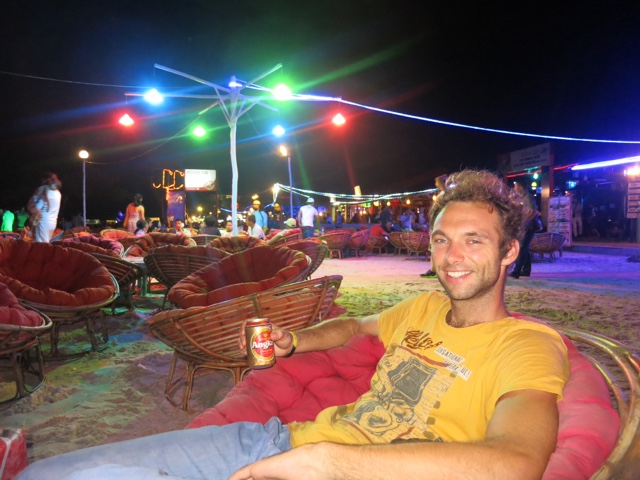


Estando en Kratie me di cuenta el tiempo que llevábamos sin estar cerca del mar, y debo admitir que el mar es uno de los elementos de la tierra que más felicidad me da, el solo hecho de sentarme frente al mar, sentir la brisa, respirar el aire puro, observar el mar y su infinito... Lo disfruto muchísimo, por lo que después de un poco de persuasión al chiwawin, nos vimos sentados en un bus que con 12 hrs de trayecto nos llevaría a Sihanouville, una ciudad en la Costa de Cambodia, concurrida por muchos turistas (en su mayoría chinos), con grandes restaurantes y casinos, y resorts que te ofrecen todo tipo de tour. Estuvimos aquí solo para pasar la noche y al día siguiente temprano tomar un Ferry a la Isla Ko Rong Samloen. 
En la isla habían tres playas en las que podías alojarte, nosotros decidimos por la que tenía menos turistas, era un pueblo de pescadores, con algunas Cabañas y Guest House, 3 o 4 restaurantes y nada más. Al inicio pude ver la impaciencia y ansiedad del Chiwawin al verse en un pueblito donde no había mucho que hacer, ni montañas que escalar, ni deporte extremo que practicar más que agarrar su libro y sentarse frente al mar en una hamaca y "relax"... Pero al pasar las horas, después de un paseo por el pueblo y la playa, empezó a gustarle más y más la calma del pueblo, ver la rutina de los locales, pasear por la orilla de la playa, sentarnos en la terraza a tomar una taza de café mientras veíamos la lluvia caer. El placer de no tener que hacer nada. 
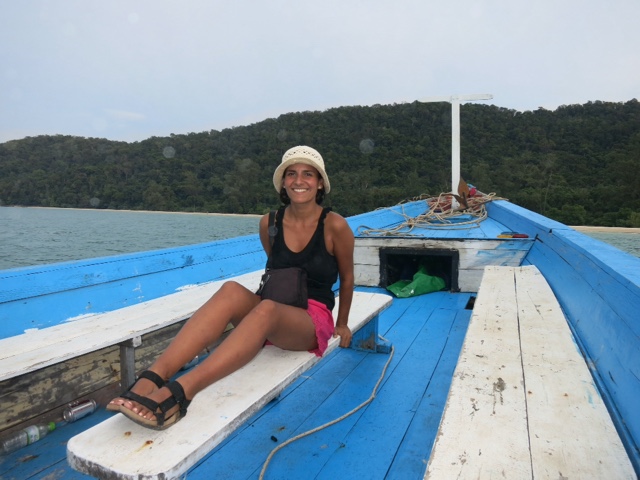


Besides of reading and relaxing we got out in the water in a kayak peddling to the next beach, enjoying the views and snorkeling on the way. Again we were surprised by changing winds and a treacherous current and getting back to our village proved to be a bit of a challenge, both of us arriving exhausted but happy. Another highlight was our nightly swim with the illuminiscent plankton. Walking to the stretch of beach farthest away from any possible light contamination, we got into the water and every movement we made, the excited plankton lighted up in the dark waters. A sudden movement of the hands would leave a mini milkyway under the water which then disappeared again. We both enjoyed playing in the water like children making figures and enjoying this natural spectacle. From time to time, my Australian research on crock atrack statistics came in mind again, considering the crocks were once endemic to all SEA, and night time is their favorite for feeding, but then I could push the thoughts away again and simply enjoyed the plankton. After getting cold and having a cold shower, I decided to warm up with a coffee and a few drops of the famous Mekong whiskey, the closest I could get to an Irish coffee on a Cambodian island, but in taste closer to Isobetadyne than to Irish coffee, but nevertheless did the job.


Al día siguiente alquilamos un bote que nos llevó a otra de las playas en la isla, esta playa mucho más amplia y equipada en infraestructura para los turistas, con Cabañas y bungalós de todo tipo, restaurantes, bares, pero que aún así... Se veía bastante tranquila. Este mismo bote nos llevó a un par de lugares donde pudimos hacer Snorkeling, terminando el tour en bote estacionados en altamar, esperando ver el sol ocultarse. Estas islas de Cambodia son famosas por el Placton que puedes ver en la noche, pues no lo pensamos dos veces y esperamos a que se ponga totalmente oscuro, y tipo 9 pm, caminamos por la playa buscando el lugar más oscuro para poder meternos al mar y disfrutar de este fenómeno. Alguna vez vieron la película "The life of Pi"? La escena en que está en el bote y de pronto ve en el mar todas esas luces de color verde fluorescente moverse? Bueno, no fue verde fluorescente pero si cada vez que hacíamos un movimiento con las piernas o manos, era como que dejáramos rastro de una luz blanca fluorescente en el agua, con Johan estábamos fascinados, haciendo figuras en el agua y adivinando que era, escribiendo en el agua, bailando y marchando... Hasta que nos dio un poco de frío, y salimos del agua para volver a nuestra cabaña. 


A final note on Koh Rong was our episode of the "fear factory". One of the best places on the island for a dip was jumping from the jetty direct in warm but refreshing crystal clear water. Ana Belen used to suffer from extreme vertigo but this fear had been ebbing away little by little during hikes and several other expeditions under my professional guidance, but then the jetty with varying heights between 1,5 and 2 meters imposed an impassable barrier. A first day, after 2 hours of therapy of all sorts, pressure, singing, dancing, meditation, duo jump, adrenaline rushes, and a burnt back from standing on the jetty, the afternoon ended with a dip, a moral one not an ocean dip and the expedition was abandoned. Nevertheless, the next day we took the challenge again and this time after about 30 minutes Belen jumped form the jetty. Although just a jump for me it was a big thing for Ana Belen and it is one of the things I like from this traveling, challenging the other to do new things, without the least sense of competitiveness but for the love of doing new things together. 


Otra de las cosas que no olvidare de nuestra visita a Ko Rong Samloen, fue cuando se me ocurrió decir a Johan que me gustaría saltar alguna vez de un muelle directo al mar y solo sentir la sensación de tu cuerpo caer...aunque sea por segundos. No conté, con que en la playa donde nos estábamos quedando había dicho muelle, con una plataforma perfecta para correr y saltar al mar turquesa que te esperaba 2 mts abajo. Pues me puse en posición para saltar, ya estaba lista, cuando el vértigo se apoderó de mí, y no me permitió saltar... A pesar de todos los esfuerzos que hizo Chiwawin por animarme a saltar... Palabras de ánimo, palabras de presión, contó hasta 3 más de 20 veces, me puso la música de Queen para animarme ("Dont Stop Me Now") hasta bailo con coreografía y todo en el muelle para despojar los nervios que llevaba encima... Pero nada resultó, a mí solo me sudaban las manos, me temblaban las piernas, veía la altura totalmente distorsionada y aumentada, a pesar de que eran solo dos metros, yo veía el agua transparente hacia abajo y se me hacía infinito, y me daba la sensación de que la altura era superior. Johan en cambio salto incontables veces haciéndome demostraciones y tipos de salto. 


With our visa for Vietnam, which we got in Phnom Penh, already running, we got on a ferry again to the mainland and after a bus ride arrived in Phnom Penh for a last night. After spending a few days in Cambodia and absorbing its history and its actuality, we had been looking for the opportunity of volunteering in Cambodia as to make our little contribution. Quickly discouraged after a bit of research and reading articles questioning the impact of voluntarism for short periods and without qualifications in such difficult countries (see the related article in The Guardian) but also of the various orphanages where children are sent by their parents, away from home and school, to an orphanage so they can support the demand from the volunteering tourism or volunteering industry in Cambodia (is the cynicism bubbling up again). The one thing I did do, was donating blood in a Swiss pediatric clinic, run since years in Phnom Penh and Siem Reap, with Swiss equipment and Swiss money, freely accessible for all Cambodian children. These clinics suffer from severe shortages of blood due to the stigma on donating blood in Cambodia and the high demand of blood from children with heamoragic Dengue fever. I was impressed by the clinic, the standards and the infrastructure and also by the big amount of people attending the clinic, proving this is an extremely useful initiative by a generous Swiss government who ultimately is not responsible for the health of the ordinary Cambodian. To substitute the lost blood, we had a good Cambodian bbq on the river bank and said goodbye to this country that had left a strong mark on our trip and the next day we bussed to the Vietnam border.


Al otro día arrendamos un Kayak y nos fuimos a dar un paseo hacia otras playas, turnandonos mientras uno maniobraba el Kayak, el otro nadaba al lado con la mascarilla de Snorkel, en un momento me vi perseguida por alrededor de 50 peces de colores, que de un momento a otro desaparecieron ... Mire a mi alrededor y no los podía ver, cuando me doy cuenta de que todos iban nadando debajo mío, casi pegados a mi barriga, siguiendo mi velocidad y ritmo... Fue simplemente maravilloso! De esos instantes en que sin darte cuenta, se te forma una sonrisa en la cara. Llegamos a una playa donde no había gente, nos relajamos y descansamos un poco los brazos antes de emprender regreso a nuestra playa. Al regreso, toco la segunda sesión de intento y salto desde el muelle y vencer los miedos. Esta segunda vez, me mentalice en que podía hacerlo, que no me pasaría nada, que era saltar y ya! Que estábamos en una isla paradisiaca en Cambodia, y que probablemente pasarían años para volver, así que era ahora el momento. Johan en su posición de aliento, dándome ánimos y haciendo barra (cuanta paciencia me tiene este hombre... Sin su ayuda y animo, quizá no lo hubiese intentado una segunda vez), hasta que después de unos minutos, decidí saltar juntos, de la mano haciendo una promesa de amor, sellándola con un salto desde el muelle. (No tenemos foto de mi triunfo y vencimiento del vértigo, ya que saltamos ambos de la mano y no hubo quien tomase la foto, solo tenemos una foto de un salto que hice desde otra plataforma más pequeña de la que salte el día anterior en el tour con el bote, que fue una práctica para saltar desde el muelle). Y así, pasaron los días en la isla de Cambodia, cerramos un capítulo más de nuestro viaje y nos subimos a un bus que nos llevaría al inicio de una nueva aventura: VIETNAM. 


miércoles, 16 de noviembre de 2016

Siem Reap and a visit to Hell of Phnom Penh


Después de nuestro viaje en bote durante 7 horas por el río, llegamos por fin a Siem Reap. Ciudad famosa por el complejo de templos y ruinas de Angkor y especialmente el templo Angkor Wat. Nuestro primer día en Siem Reap, decidimos hacer una visita al museo dedicado a los templos de Angkor Wat, así nos hacíamos una idea de que era lo que íbamos a visitar y nos nutríamos con un poco de historia y significados de los templos para la gente en Cambodia. El complejo en sí, es un conjunto de varios templos, de diferentes tamaños, estilos, y con fines distintos a su vez. Por ejemplo, los pequeños eran usados para ceremonias y rituales, los templos más grandes, servían además como vivienda de los reyes de la época. Cada vez que un rey fallecía y el imperio pasaba a manos del siguiente rey, este se encargaba de hacer construir un templo más grande, de modo que lograría ser recordado en el futuro, y además mientras más grande el templo, era símbolo de poder y fuerza. 


The main objective in Siem Reap was obviously the Angkor Wat complex, which is not just an ancient ruin but an extended city covering hundreds of square kilometers and consisting of ruins of temples and palaces but also of baths and irrigation basins and were once interspersed with patches of agriculture and simple residences. Constructed over several centuries roughly a 1000 years ago at he height of the Khmer empire, it is mainly megalomaniac temple ruins that now remain built by several successive dynasties and reflecting the early Hindu influences as well as the later conversion to Buddhism.


Dividimos nuestra visita a los templos de Angkor en tres dias, donde el primer día a través de un grupo de viajeros en Facebook, logre encontrar un guía local pero que hablaba inglés y español a su vez. Fue genial hacer este tour con Rithy (nuestro guía) quien feliz nos mostró los templos más importantes del complejo, transportándonos en su tuk tuk (más conocido en Perú, como taxi moto). Partimos el día tipo 8 am y terminamos tipo 4 de la tarde. Caminar entre los templos era realmente como transportarte miles de años atrás, a mí el lugar me fascinó, y no necesariamente el famoso Templo Angkor Wat, que es la razón por la que todos los turistas visitan este complejo de templos y ruinas, sino que habían otros templos más chicos, pero que las construcciones eran realmente espectaculares, construcciones que solo puedes comparar con la ciudadela de Macchu Pichu o con las pirámides de Egipto. Eran bloques de piedra enormes, puestos unos sobre otros, calzando perfectamente sin dejar una ranura ni orificio... Esas esculturas en los muros, con motivos Hindu y Budistas, esculturas de animales, esos pasillos largos alrededor de los templos... Impresionante. Pero los templos que más llamaron mi atención fueron aquellos que con el paso de los años habían sido intervenidos por la naturaleza, y tenían un árbol que salía por el medio de las ventanas o puertas del templo. 


While every temple or complex had its own peculiarities and beauty, the temple with the 100 or so faces of Buddha alias King Javarman the 7th, overlooking the entire city in all directions with its serene but controlling expression was the most striking to me. The uttermost expression of the benevolent but omnipotent big brother King reigning a mighty empire. Apart from the Chinese civilization because of its endurance and cultural solidity and perhaps the Mongols who knocked, very hard, on Europe's gates, we barely now a thing about Asian civilizations such as the Khmer, who were once a dominating force in South East Asia in eternal battle with the Thai and the Cham.


Después de nuestro paseo en el Tuk Tuk de nuestro amigo Rithy, regresamos a nuestro hospedaje a darnos un baño y salir a cenar, y posterior a la cena nos fuimos luego de copas de bar en bar siendo guiados por Maarten. Al día siguiente, nos alistamos muy temprano y salimos por segunda vez a visitar los templos, pero esta vez en bicicleta... Una vez más guiados por Maarten, quien nos llevó por el camino (atajo) donde pasamos por pueblos y caminos no siempre pavimentados, haciéndose un poco complicado llegar a nuestro destino, quedando casi casi estancados en un charco de lodo, que vi desde lejos y grite con anticipación: "Nooo .... nos vamos a hundir!" Pero dado que iba en él Tándem  con Johan, y él siguió pedaleando, llegamos al charco y quedamos parados ahí con las llantas completamente bajo el lodo, yo con las piernas en alto para no quedar entera en barro, Johan sin saber qué hacer e intentando hacer equilibrio para que la bicicleta no se nos de vuelta, y Maarten detrás viendo el espectáculo y en ataque de risa. 


On of this world heritage you would think, is payed in a modern complex with professional attention, managed by a privately owned company awarded the contract in an obscure tender process. This company belongs to a holding group belonging to one of Cambodias big magnates, with strong connections to contemporary politics, and doesn't have to publish its finances. From the estimated (there is no official record) 150 million USD coming in entrance fees, roughly 10% goes to the body operating Angkor Wat paying the gardeners, the ticket controllers, the cleaners etc, while 90% disappears in outer space or in very deep pockets. Restoring and maintenance of the extensive ruin complex is financed by donor money from countries such as Japan, Germany etc.. This I learned later in our visit but probably wouldn't have changed much in our decision to take the opportunity to visit one of UNESCOs world heritage centers. Nevertheless, I find that with the rewards of a UNESCO recognition, and apart from the obligation to maintain the original structures, their should also be an obligation in publicly disclosing the financials surrounding these sites in order to make world heritage truly contribute to humanity and not to greedy Cambodian tycoons.


El último día al complejo de Angkor, lo hicimos nuevamente con nuestro amigo Rithy, quien nos llevó a un par de templos alejados de la ciudad, y luego nos llevó a conocer un museo de minas antipersonales. Aquí fue cuando empecé a conocer un poco más acerca del triste pasado reciente que había sufrido la población de Cambodia. Este museo trataba de una recopilación de minas (granadas) que habían sido sembradas en la época de guerrila cuando Pol Pot estuvo al poder. Durante la época en que los Khmer rojo tomaron el poder (consecuencia de la guerra en Vietnam, el pueblo de Cambodia también se vio afectado y fueron bombardeados muchos pueblos que servían como paso para envío de provisiones) los Khmer rojo eran un grupo de revolucionarios, que habían luchado siempre contra el gobierno y que tenía ideas bastante radicales de cómo debería ser la nación. Para hacer cumplir sus ideas, lo hicieron a la fuerza, y controlando gran parte del país, donde a su vez sembraron minas antipersonales (granadas especiales para mutilar gente) y por las que hoy en día, uno puede ver muchísimos adultos y niños, sin piernas, sin brazos, o incluso sin extremidades enteras. Es bastante triste ver gente inocente que fue afectada por estas minas, que hasta el día de hoy siguen escondidas y activas (lo peor de todo) en zonas rurales y nadie sabe bien dónde están. Bueno, sobre eso trataba este museo, como se sembraban las minas, como fue el trabajo para desactivarlas y removerlas, y como están ahora trabajando con estos niños vulnerables víctimas de las minas antipersonales. 


Our first day we spend touring in a rickshaw and seeing the main highlights of the Angkor Wat establishment. For the next day, we decided to rent bicycles, a regular and a tandem respectively, to conquer the ancient complex. We celebrated a first good day and the glory of the Khmer empire with a good meal and a cycling pub crawl conquering Siem Reaps holes in the wall, under Maarten's guidance. Consequently, the first hour pushing the pedals on the tandem the next day came with the necessary suffering and a nap at the mighty gates of Angkor Wat, followed by a splendid day leisurely cruising through the ancient ruins with the complete freedom of our own combined four wheels.


The last day we spent again in the rickshaw through the countryside to one of the further away temples again with our guide Rithy, who spoke a decent mouthful of Spanish, learning the basics in the temple and practicing with foreigners. I was impressed by the effort and the entrepreneurial drive of these young Cambodians to cater for Spanish speaking tourists, the most important visitor group in the low season. On the way back we made a stop in the landmine museum, created by a former red Khmer child soldier, later siding with the Vietnamese in the liberation of Cambodia and finally wanting to contribute something to his country. He started clearing UXOs and land mines where requested in small villages and rural areas and was later forced into setting up a certified entity as accidents with mine clearance for scrap metal kept mutilating people. The mine museum, also housing a boarding school for vulnerable children, showed everything about the landmines from their technical specifications, to fabrication sites, impact on people and society, cost of manufacturing and clearing (times a hundred) and the affected countries. Surprisingly, some of the countries with still a high index of landmine presence are Chile and Peru due to the tensions in he aftermath of the Pacific war and tragically Afghanistan, Syria and Iraq (history repeats itself). Apart from landmines both rural Cambodia and Laos are paved with unexploded ordnance from the US carpet bombing missions, dropping 3 million tons of bombs, more than dropped in the Second World War to destroy supplies on the Ho Chi Minh trail. In vain. After the landmine museum, we drive to the airport where the lead grey sky burst into heavy monsoon tears for Maarten's imminent departure. Maarten, it was great to have you with us and to share in our adventure.  


Después de nuestro último día en Siem Reap y visitar los últimos templos, pedimos a nuestro amigo Rithy que nos llevara al aeropuerto en su Tuk Tuk para despedir a Maarten que tenía que tomar un avión a BGK y de ahí continuar hacia Bélgica. Los días se nos pasaron tan rápido  como en un abrir y cerrar de ojos, pero bueno dicen que uno siente que el tiempo vuela, cuando estas realmente disfrutándolo y pasándolo bien... Y nuestros días con la compañía de Maarten fueron realmente divertidos, aventureros y llenos de anécdotas e historias que contar para el futuro. Gracias Maarten por haber viajado desde tan lejos para darnos el alcance y compartir tus vacaciones junto a nosotros en nuestro viaje largo. Y así fue, como otra vez los chiwawines  quedaron solos para continuar con su aventura por Cambodia. 


Our last day in Siem Reap, after looking in vain for the Handicap International rehabilitation center which doesn't exist anymore in the city, we decided to visit a silk farm run by an organization called "Artisans d'Angkor". The purpose of the program was to teach women from poor and rural environments, making and processing the famous silk and, through education and guidance, give them a certain career prospect from trainee to expert artisan. The free visit, including free transport from the city, was simply fascinating. I was thrilled feeling and seeing the cocoons which were once a Chinese state secret, and the processing steps are beautiful manual work preparing and working the almost invisible threads into the finest textiles. Closing my eyes I imagined if it was worth stealing a few cocoons to smuggle them through the Taklamakan desert and over the Khyber pass or if I should simply buy a few camel loads of the precious textile to sell them for record profits in the European courts. Then I opened my eyes and got on the bus back to Siem Reap with a few scarves from the souvenir shop.


Después Siem Reap, tomamos un mini bus hacia Phnom Penh (en realidad era el bus de Correos nacional de Cambodia, donde ofrecían algunos asientos para llevar pasajeros de Siem Reap a Phnom Penh, la capital de Cambodia). Trataré de ser bastante objetiva, aunque me costará un poco ya que la capital de Cambodia provocó en mi muchas emociones y sensaciones, no necesariamente buenas o de felicidad. Para empezar, llegamos al terminal donde debíamos bajarnos y buscar nuestro hospedaje, y lo primero que vi fue calles sucias, cables de electricidad colgados y mal instalados por todos lados (un peligro tantos cables juntos y expuestos al alcance de cualquiera) fachadas de casas sucias, atravesamos un mercado donde nada se veía limpio, los pisos llenos de barro, bolsas plásticas en el suelo, basura en la calle, caminamos varias cuadras hasta dar con la calle de nuestro hospedaje, que para nuestra sorpresa quedaba a una cuadra del barrio rojo de la ciudad... Y bueno, este era el barrio donde estaban todos los hospedajes y hostel para backpackers. Un poco desanimada, por lo que había visto, para mí era una ciudad totalmente caótica, decidimos dejar nuestras mochilas en el hostel y salir a dar una vuelta a conocer los alrededores... paseamos por el malecón al lado del río, nos sentamos en una banca del parque solo a ver pasar la gente y ver un poco el comportamiento de los locales. De pronto, empecé a percatarme de la cantidad de mujeres locales y niñas locales que andaban del brazo de extranjeros mayores. Si, y cuando digo niñas es porque no tenían más de 18 años, cara y cuerpo de niña, envueltos en vestidos apretados, escotados y kilos de maquillaje encima para aparentar ser adultas, de la mano o del brazo de hombres de 60 o 70 que muy orgullosos se paseaban con estas niñas cual trofeo. Me dio pena, sentí lastima por estas niñas. Luego decidimos volver a nuestro hospedaje y pasamos por la calle de los bares, donde en realidad ... Eran de ese tipo de bares donde ves a señoritas en vestidos cortos de color rojo, bien maquilladas y en tacones, sentadas en sillas en la puerta del bar, esperando por clientes. No eran bares precisamente, eran prostíbulos que funcionaban las 24 horas del día, y donde también podías identificar a algunas niñas entre las que estaban ahí esperando por clientes. A mí esto me choco muchísimo, antes no había visto el mercado sexual tan expuesto en ningún otro país. 


Everybody has heard once about the odd name of Phnom Penh, one of Indochina's classics, but nobody really has a clue where or what it is. The next day, instead of taking the bus, we got a ticket for what in history classes we learned of as the "diligence" or the modern days post delivery van. A high quality minivan, with a slow driving driver only concerned about getting his packages and letters in Phnom Penh and not about the amount of people or trips he can make, this was a comfortable and safe ride. Our first encounter with PP was a bit of a shock as it was considerably more dirty and grim than Thailand and the walk from our drop of point to the hostel of some sorts took us through a dirty market into the center of the red light district. The area full of young, presumably mostly rural girls escaping poverty, in short skirts and heavy loads of make up would be our base for the next few days. Nevertheless, I rarely dislike a place, and soon I started finding the charm of the Cambodian capital, the eateries, the slow pace of life, the palace stupas on the skyline, the relax riverfront until I finally enjoyed this crude but leisurely city with its international character.


Recuerdo cuando estábamos en Malasya en el cruce de frontera a Thailandia, y conocimos a un malay haciendo la fila con nosotros y nos preguntó cuál era nuestro itinerario de viaje, cuando le contamos y respondimos que iríamos a Thailandia y después a Cambodia, automáticamente este nos advirtió: "En Thailandia, ok la gente es buena, no hay problema... Pero cuando vayan a Cambodia tengan mucho cuidado, NO CONFÍEN EN NADIE, la gente no es honesta, son muy mentirosos". Esto se me quedó grabado por unos días, y luego lo olvide...hasta que un día disfrutando de uno de nuestros típicos paseos por el malecón en Phnom Penh , vimos que a lo lejos caminaba un Monge Budista, y que al vernos empezó a cambiar su dirección y dirigirse a nosotros. Al llegar a nuestra banca donde estábamos sentados muy tranquilos disfrutando de nuestro pomelo con azúcar, nos abordó preguntando de donde éramos y estrechado su mano en gesto de saludo al cual respondimos amablemente, al tratarse de un Monge. Luego, nuestro amigo Monge saco una pulsera de madera que llevaba colgada, y empezó a hablar en un idioma que ninguno entendió (de echo, no sé si era un idioma, creemos que empezó a decir cualquier cosa) simulando un rezo o plegaria que decía: "A veré veré, veré veré, mere tere, seré" algo más o menos parecido a la canción del "Asereje"... Con Johan, nos miramos y aguantamos la risa, al darnos cuenta que era un impostor y el ridiculo que estaba haciendo, seguidamente puso la pulsera en la frente de Johan en símbolo de bendición y luego repitió el mismo acto conmigo, otra vez la canción del Asereje, y me puso la pulsera y luego nos quedo mirando con una sonrisa y la esperanza de que le demos una donación, por habernos dado las pulseras bajo la bendición del Asereje. Nos miramos, nos retiramos las pulseras y le dijimos que no gracias, que no las necesitábamos, él insistió en que no las devolvamos y nos las vuelve a poner y pide 5 dólares. Con más ganas, nos las quitamos y se las entregamos. Se retiró. Frente a nuestra banca había un par de locales muertos de risa al ver todo el show que acabamos de protagonizar con el Monge, y se nos acerca y nos dice: "ese hombre está loco, se disfraza de Monge, hace creer a la gente que hace un rezo y luego intenta venderte esas pulseras a 10 dólares y una vez que te las pone, no deja que se las regreses". Dos veces más lo volvimos a cruzar distintos días, y al parecer no recordaba nuestras caras, y se acercó haciendo el mismo show, y con Johan ya un poco aburridos del engaño lo encaramos diciéndole apenas se acercaba:"No tenemos plata, lo que haces no es correcto. Eres un impostor, y no debes estar así engañando a la gente". La respuesta del Monge budista: una sonrisa descarada, guardo sus pulseras y se marchó sin discutir. Nunca hubiese imaginado un Monge falso. Después con Johan jugamos a los detectives encubiertos para poder obtener una foto del Monge falso, aunque no fue tan fácil.


Again one of these unexpected meetings came with one of Belen's old friends of the neighborhood  and his girlfriend and we went to the famous S21 prison, where high profile "suspects" of the Red Khmer were tortured until they finally wrote down whatever they had to confess and were then brutally killed in a nearby killing field. Starting with ideologies of Sorbonne educated Cambodians, the Khmer Rouge under Pol Pot turned history back to the year Zero to start a new agrarian and communal history massively deporting Cambodians to rural areas to work on rice production with Stone Age methodologies, banning all technology. Children were considered to be not polluted by before year Zero ideas and were indoctrinated to become one of the most brutal child soldiers. Anybody resembling to pre year zero urban and intellectual elite was eliminated, university graduates, teachers, speakers of foreign languages, people with glasses, artists, writers, effectively eliminating Cambodias intellectual pillar marking Cambodian history for decades to come. It is estimated that 30% of the population succumbed to brutalities, starvation or disease. The museum is a very strong experience in demonstrating the absolute madness of how an ideology can spiral out of control to brutally kill a big part of the proper population, with moving personal stories, gripping pictures and some of the installations still intact. The thing that most touched me were the pictures (everybody was photographed and documented, inmates and workers alike) of the children when they were recruited, full of joy and smiling as children do. These smiles would gradually disappear into a murderous gaze as through indoctrination, practice on animals and practice on real people they were transformed in ruthless killing machines. S21 was definitely one of the strongest and most shocking experiences on our trip.


Muchos imaginaran que en todo nuestro viaje, solo nos dedicamos a visitar lugares fantásticos, paisajes maravillosos, playas paradisiacas... Y si, es lo que por lo general buscamos encontrar, pero también hay lugares donde la realidad o historia no siempre te ofrece eso, y en su lugar solo encuentras pobreza, estafas, suciedad, abandono, tristeza. Eso me pasó cuando decidimos visitar la prision S21, donde muchos de los que estaban en contra de los Khmer Rojos, y muchos inocentes capturados por las tropas de los Khmer, terminaron en esta prision donde el que entraba... No salía. Por primera vez en la vida, sentí haber estado en el infierno sin siquiera haber muerto. Sentí impotencia, pena, angustia, compasión, desesperación al oír las historias que iba narrando el audio guía mientras visitábamos la prision, que es la única que se mantiene casi intacta a cómo fue encontrada hace 40 años. Las camas metálicas donde torturaban gente, las herramientas de tortura, algunas cadenas atadas al piso donde encadenaban a los prisioneros uno, pegado al otro, algunas manchas de sangre aún en la pared... Ventanas con rejas y todo el centro bordeado con alambres y púas para evitar cualquier intento de escape. 


Lo que más me afectó, fueron dos cosas. La primera fue darme cuenta de cuanta crueldad puede llegar a existir en el ser humano, como a través de una ideología la gente simplemente se priva de emociones y actúan como robots para conseguir lo que se les ha enseñado... "El fin, justifica los medios". Y lo otro fue la cantidad de extranjeros que en ese momento andaban en Cambodia, algunos trabajando y otros haciendo su sueño realidad de dar la vuelta al mundo, y justo les tocaba pasar por Cambodia, fueron arrestados, encarcelados, torturados y obligados a confesar para finalmente firmar la sentencia de muerte. Esto me conmovió mucho, ya que me puse en el lugar de ellos, y realmente sentí terror... Llegar a un lugar donde no entiendes que está pasando, que te detengan, te priven de tu libertad, te golpeen, torturen, finalmente te maten, y no tener al menos la oportunidad de despedirte de tus seres queridos. Me di cuenta de lo frágil que puede ser la vida, dependiendo de las circunstancias en las que te toque vivir... Agradecí el haber estado a salvo en todo este viaje, él no haber pasado por momentos de peligro, el poder aún comunicarme con amigos y familiares y recordarles cuanto los quiero. 

(Foto del S21 extraída de internet, nosotros no fuimos capaces de tomar fotos mientras hacíamos nuestra visita). 

Less strong because administered in small doses through our Cambodian travels, but no less shocking, is the perversity of post Khmer Rouge Cambodian history where the western world keeps supporting the Khmer Rouge till 1991, 15 years after having been driven out and having started one of history's most cruel experiments. The perversity of the power grabs after the liberation, indifferent to justice but obsessed with sluicing the countries riches to private pockets. The perversity of the complete farce of the billions of donor money to rebuild the country disappearing in bank accounts of a happy few while keeping up appearances of reform. The perversity of many ex Khmer Rouge commanders in high ranking political positions. The perversion of the obstruction of justice, after the conviction of the 5 most emblematic leaders, to continue bringing justice to the next ranks, some of them in comfortable political or government positions. The perversion of the failure of the international community to rebuild the country but presented as successes in high profile ppt presentations on donor conferences. Strolling over the nice Phnom Penh riverfront couldn't make me swallow the cynicism that had arisen in me after these few days, nor could the cold draught beers and not even the degustation of the famous Cambodian snack of fertilized duck eggs with lemon, salt and chili. So we decided on a change of air and to go up north to another provincial backwater on the banks of the Mekong. 


A pesar de lo caótica que encontré la capital de Cambodia, debo reconocer que después de visitar la S21, Johan y yo quedamos en un "mood" extraño, sin muchas ganas de festejo, pensativos, un poco cabizbajos... Por lo que decidimos animarnos, y tratar de buscar lo bueno en esta ciudad. Caminamos a lo largo del malecón por el río Mekong, disfrutamos del sunset, caminamos hacia una zona tipo boulevard, con restaurantes y parrillas, donde el 95% eran gente local, y ahí lejos de la zona turística, backpackers y zona roja, disfrutamos dos noches de unos calamares y pulpo y verduras al BBQ estilo Cambodiano... Delicioso! También estábamos en las fechas de celebrar nuestra cita, por lo que asistimos a un bar "cine", un concepto muy interesante manejado por un inglés, donde fuimos a ver la película "Killing Fields", no es la más romántica ni alegre (pues trata sobre esta época de los Khmer rojos que tanto he mencionado), pero dado que habíamos acordado no ir a los campos "killing fields" porque ya nos parecía bastante con lo que habíamos visto y oído en la S21, decidimos ver la película para  dar mejor contexto y entender nuestro entorno. Después de la película, fuimos a cenar a un restaurante Hindu, frente al malecón, viendo las niñas pasar de la mano de extranjeros que parecían sus abuelos, y una vez más al Monge del Asereje, intentando vender sus pulseras "benditas" a inocentes turistas... Suficiente con Phnom Penh, decidimos ir a algún lugar más tranquilo y relajado... Tomamos un bus que nos llevó al norte del país,  y terminamos en Kratie...un pueblito chico al lado del río Mekong.