domingo, 2 de julio de 2017

Khajuraho - Templos del Kamasutra


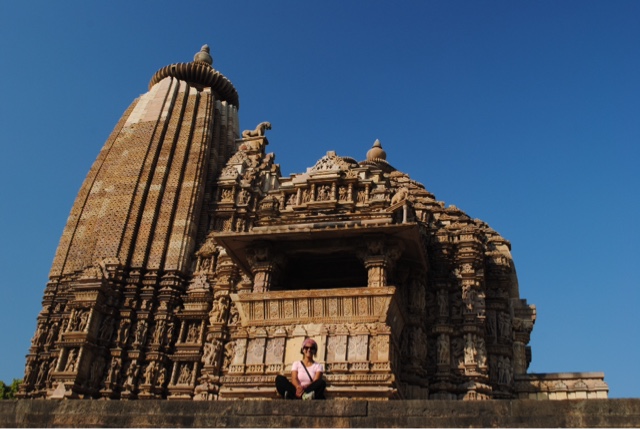
After a long night of deep sleep in a soft bed and waking up to the sound of birds, the temples of Khajuraho were our next destination. The temple complex consisting of several magnificently sculpted Hindu temples is mostly famous for its erotic, not to say pornographic, sculptures on some of the temples. The explicit, and almost physically impossible positions of copulation, often with assistants, are said to refer to sexual intercourse and actions as a medium of communication between the human and the divine, much as in the tantric practices. Although not all temples have such an explicit imagery, many of the temples, belonging to one of the many ancient Indian dynasties, have exquisite carvings and motifs. With a downloaded audio guide, we wandered around for several hours watching the carvings and the architecture and were fascinated by the stories, facts and legends from these ancient people. On the walk back to our guesthouse, we drunk one of probably the best Indian teas in our 2,5 months on the Indian subcontinent. The chaiwallah, due to his choice of spices and milk and a delicate process of boiling, cooling and pouring, served us teas with a consistency bordering that of drinking yoghurt.


Llegamos a Khajuraho despues de haber estado viajando por más de 24 horas continuas, entre buses, trenes y más buses por caminos de tierra que nos dejaron empolvados de pies a cabeza. En Khajuraho, caímos en un hospedaje que resultaba ser un Ashram donde uno de los socios daba clases de meditación y Yoga tantrico. Fuimos recibidos y acogidos muy cariñosamente en este hospedaje, donde además nos dieron una de las habitaciones "de Luxe" a precio de una standar. Así que esa noche, descansamos en una buena cama de más de 2 plazas, con sábanas limpias y suaves, nos dimos una buena ducha de agua caliente y recuperamos energías para nuestra visita a los templos al día siguiente. 
Al día siguiente con el canto de pájaros que venían al jardín del Ashram, despertamos y tomamos desayuno en la pequeña terraza que daba a las instalaciones del jardín. Una vez listos, caminamos hacia el complejo de templos que estaba a menos de 2 km de nuestro Ashram. 


Back at the ashram, we took a shower as we had had few in India, hot and plenty of water, and with warm clothes sat down next to the fire that our host, Viru, had prepared. With a cold beer in the hand and warmed by the fire, we witnessed how Viru prepared a typical Indian curry with goat meat on a wood fire. The goat legs didn't have much meat but according to Viru, it was the taste of the gravy, obtained after boiling the bones for hours that really mattered. We talked and we waited and we smelled and talked and waited and smelled and so on for a good 2 hours, until it was decided it was good enough. While we were treated on the few bits and pieces of the actual meat, the rest waited for a bit more and then we enjoyed the gravy with ash baked chapatis or Indian flatbread. Not sure if it was the wait or the taste, probably both, but the food was absolutely delicious, and nothing better than having wood fire made food around the fire with sips of cold beer. We thoroughly enjoyed this Indian hospitality and gastronomy and with full stomaches we crawled into our warm and soft beds for another night of delicious dreaming. 


El Complejo de templos es interesante por la gran cantidad de templos con distintas figuras eroticas esculpidas en sus muros, pero lo que a mí me fascino fue el gran trabajo y detalle que se podía observar en estos esculpidos. Cada figura / forma estaba tan bien hecha, que si observabas con tiempo, podías notar que por ejemplo las imágenes de mujeres tenían talladas joyas y accesorios que imagino pueden haber sido trabajadas solo por artistas. 
Alguna vez han escuchado de los libros del "kamasutra"? Bueno, se supone que estos libros se inspiraron en las posiciones y tallados que encuentras en los muros de los templos de Khajuraho. Me pregunto si hace más de 1000 años, la gente realmente practicaría ese tipo de posiciones casi imposibles. Aunque en varias de las imágenes que se observa, por lo general hay más de un "ayudante" que se encuentra presente en el momento del acto sexual, y ayuda a la pareja a lograr dichas posiciones, de modo que alcancen el contacto con lo divino.  
Al llegar a nuestro hospedaje, el administrador del Ashram, nos tenía preparada una fogata en el jardín del Ashram, donde el mismo nos preparó un estofado de cordero con distintas especies y mucho ajo. Nos sentamos a disfrutar de una cerveza fría, al lado del fuego, mientras esperábamos que a fuego lento se cocinara ese Cordero, que tres horas después estaríamos saboreando con arroz y panes. 


Our second day in Khajuraho we spent wandering around the western group of temples at a very slow pace. The temples on this side were mostly Jain but also richly adorned, in stark contrast to the poverty of the surrounding town where people were scratching a meager living herding their cows between the garbage and washing their clothes in public basins or wells. We were approached several times by friendly, excellent English speaking schoolboys who after some nice conversation inevitably invited us to their houses. Later speaking to our host at the ashram, many of these houses were small hidden shops selling archeological artifacts from the site and the surroundings. Khajuraho had proven to be a relaxing and tranquil but interesting place with a nice guesthouse and place to relax and spend the night but now it was time for another cold night train and another embassy run in the jungle of Delhi.


Nuestro último día en Khajuraho, fuimos a recorrer el otro lado del pueblo, donde encontramos otro complejo de templos, pero esta vez correspondían a los Jain. 
Los Jain, son personas que pertenecen a una secta que se desprende del hinduismo. Pero tienen prácticas y creencias un tanto diferentes. No voy a entrar en detalle, porque tampoco me manejo tanto en este tema... Pero si les puedo contar algunas características que llamaron mi atención respecto a los Jain. 
Los Jain, más que nada buscan la divinidad o el camino hacia la divinidad desprendiéndose de toda posesión material y afectiva. Es decir, si quieres ser parte de los Jain, debes renunciar a todas tus cosas materiales y también a tu familia. No tener ningún apego ni nada que te ate. Ellos buscan el camino a la divinidad, guiados por un maestro o "sabio" que se encarga de  dar pautas que ayuden a trabajar el espíritu. En todo momento de su búsqueda de lo divino, lo hacen sin hacer daño a ningún otro ser viviente. Es decir, no comen animales, al caminar por los bosques lo hacen con mucho cuidado de no pisar ningún insecto, incluso solo comen de día y no de noche, de modo que puedan evitar comerse algún animalito que se haya metido en el plato de comida. Una vez más, quedamos fascinados por los trabajos realizados en los muros de los templos. Eran realmente una obra de arte. 
Nos llegó el momento de decir adiós a Khajuraho, nos despedimos de nuestros amigos del Ashram, y nos dirigimos a la estación de trenes donde tomaríamos un tren nocturno hacia Delhi. 


martes, 27 de junio de 2017

Vishakpatman and Jagdalpur


From Hyderabad we took the overnight train to the coast of the Bay of Bengal, to the city of Jagdalpur. We shared our 6 berth compartment with a bunch of young Indian shipyard workers, on their way back home for the harvest festival in their villages from Mumbai. We had a nights sleep and then still a few hours to go, while we chatted, played scrabble, shared food with our fellow travelers and read. Belen was reading a travel book on India with an image of Shiva at the front cover. While I was talking to one of the shipyard workers, he suddenly started pointing at the book upon which I gave him the book but that was not what he wanted. In between basic English, I was trying to figure out what he was pointing at, until I finally figured out that I was with my feet too close, almost on top, of the book and the image of Shiva, which in his eyes was blasphemy. I apologized extensively and that was how we rolled into Vishakpatnam. 


Después de nuestra jornada en tren alrededor de 14 horas, llegamos a Vishakpatman, un pueblo en el que paramos a descansar una noche antes de continuar nuestro viaje hacia destino final: Jagdalpur, pero no quiere decir que Vishakpatman no tuviese algo interesante que mostrarnos, al contrario...esta ciudad es famosa por un complejo de templos en honor a Budda, en lo alto de una montaña. Llegamos a la ciudad, dejamos nuestras mochilas en el hospedaje y salimos en busca de un taxi que nos acercara a los templos. Al llegar al lugar, se podía observar desde la entrada del recinto la montaña que albergaba los templos escarbados en la cima, todo esto en medio de un jardín enorme. Nos dirigimos a trepar la montaña, llegamos a la cima donde habían un par de templos, y ruinas de lo que al parecer habían sido habitaciones para los monges Budistas. Desde la cima teníamos un vista fantástica de los alrededores.


Although there is a stretch of beach in the town, being one of India's big ports, I didn't find this an attractive idea and instead, after checking in to our hotel, we took a train back inland to visit a few century old Buddhist monasteries carved into the rocks with stunning and mystical Buddha images. Since being in India we had visited Hindu temples, Sikh temples, Jain temples, mosques, churches and cathedrals, a synagogue and now finally visited a Buddhist place of worship. The sites were situated on a few hill tops and consisted of monasteries, places of worship and carvings surrounded by miles and miles of rice fields. Nevertheless, Vishakpatnam was just a pitstop in between train journeys and as such the next day, we took another train, famous for being one of India's most scenic train journeys, to the inland and remote city of Jagdalpur. The region is inhabited by many tribal people of different tribes and most famous are their colorful daily markets in different villages, where produce and animals are sold. The train ride took us another 10 hours after which we arrived in Jagdalpur, looking for a hotel. Our first choice only had the "presidential suite"  available, which we kindly declined. Night falling, in a strange city, where foreigners are quiet uncommon, we started walking the streets in search of something more affordable but all hotels claimed to be full. They probably just didn't want any trouble hosting foreigners in a region previously known for their Maoist rebel activity. When we were getting a little desperate and heading in yet another hotel, by now decreasing in their first sight rating, the hotel clerk reluctantly told us there was still one room. After inspecting and Belen not being very happy, we accepted. When I wrote my name in the register the clerk looked at me questioning and then asked "Are you a Christian?" which I confirmed. The initially serious clerk than broke in a big smile saying "I am Susile, I am a Christian too". While at first I couldn't share his enthusiasm, I was then puzzled how quickly people could determine religions and castes by simple names and also how important it is to them. Sharing Christianity and our Christian names suddenly broke the ice.


Recorrimos todo el complejo, subiendo y bajando distintas montañas donde los templos estaban ubicados en las cimas. Es increíble cuantas religiones pueden convivir en el mismo país. Nuestro viaje a través de India, nos ha llevado a conocer desde coloridos templos Hindu, Mezquitas silenciosas donde respiras paz y calma, Iglesias y Catedrales cristianas cargadas de cuadros y pinturas con pasajes de la Biblia, hasta una sinagoga visitamos en Kochi... Y ahora visitábamos templos Budista. Si bien es un país en su mayoría Hindu, debo reconocer que existen otras religiones que se practican en India y que saben convivir muy bien con el resto. Existe un respeto por todas las religiones que creo que es lo que hace especial a India, es un país inclusivo, aceptan y respetan a la gente de diferente religión. 
Pasamos una noche en Vishakpatman y a la mañana siguiente salimos en tren con dirección a un pueblo donde aún se mantienen tribus originales: Jagdalpur. Después de 10 horas de viaje llegamos a nuestro destino. Sin reserva hecha en algún hospedaje, empezamos a caminar por las calles de Jagdalpur buscando algún hospedaje donde dormir. Curiosamente todos los hospedajes estaban llenos de gente, no había espacio. Como ya se iba haciendo de noche, decidimos decir que sí, al único hostel que nos ofreció una habitación. La habitación una vez más, no era de las mejores... Era una pocilga más, por lo que mi "mood" no era el mejor. Como sea nos acomodamos, pusimos nuestro mosquitero, para no ser devorados por los zancudos... Nuestras bolsas de dormir para no ser picados por posibles pulgas o bedbugs. 


After a terrible night because of drunk screams and singing, according to Susile to be attributed to some Orissa folk drinking and then behaving as buffaloes, we woke up to a Saturday morning. Saturday was the day we had come for as the biggest regional market would be taking place in Jagdalpur. After an Indian breakfast we headed to the market, where we were immediately surrounded by all the sounds and smells of an Indian market. The most fascinating were the people and their dresses though. While still Indian in complexity, many of the mostly women faces were adorned with heavy jewelry in the nose, ears and around the neck. Every tribe has its different aspects and while men have mostly adapted their dress attitude towards "modernity", the women are very distinct with for example big studded nose jewels. Also some of the products on sale were typical handicrafts of the tribes the most fascinating being a metal work through the lost wax process and forgotten in other parts of India. Unfortunately, because we didn't have a kitchen and frying pan, we didn't try the local delicacy being red stinging ants, which fried, make for a delicious chutney. The tribes people speak native languages, a bit of Hindi and absolutely no English which made communication rather difficult but I also noticed a certain un-Indian reservedness. After the Hmong people in Vietnam, who were much more outspoken than their Vietnamese brothers, it called my attention how these ethnic minorities can not only be different physically and with its habits, but also different in personal character,  moulded through generations of cultural difference with their surrounding environment.


A la mañana siguiente amanecí con un terrible dolor de cabeza, de esos que no puedes abrir los ojos porque la luz te molesta y te causa dolor. Yo creo que fue producto de la mala noche que pase al no poder dormir y descansar correctamente ya que algunos huéspedes en las habitaciones de al lado, estuvieron haciendo bulla, poniendo música a volumen alto hasta altas horas de la madrugada. Y bueno, ahí estaba yo sin muchas ganas de salir, con el cuerpo adolorido sin haber descansado. Johan me insistió para que salgamos a buscar un lugar donde tomar desayuno y animarme con un café. Terminamos en un restaurante donde todo lo que ofrecían eran cosas picantes y te. No había cafe. Decidí pedirme solo un té y unas bolas rellenas con carne que al final resultaron ser tan picantes, que no las pude comer. Después de unos minutos, decidí relajarme a ver si el dolor de cabeza se me iba. Me quedé mirando por la ventana, y hubo alguien que llamó mi atención. Fuera del restaurante había un patio interior donde había una señora agachada en el piso trapeando ayudada de un trapo y un balde de agua, parecía bastante cansada, el sol estaba bastante fuerte y ella estaba ahí agachada refregando loceta por loceta con las manos. (Para Navidad decidimos no darnos regalos con Johan, y habíamos hecho el trato de que en vez de gastar en regalos para nosotros, ese presupuesto se lo daríamos a alguien que lo necesite más que nosotros, quizá donarlo a alguna ONG, o fundación... O simplemente darlo a alguien en la calle que pueda necesitarlo). 
Y mientras miraba por la ventana a esa mujer, recordé ese dinero de Navidad que tenía guardado... Y algo me dijo que era el momento de entregarlo. La mujer era pequeña de estatura, más huesos que músculos, la piel tostada por el sol, cabello largo y recogido en un moño donde podías apreciar que el 80% eran canas, creo que estaría entre sus 65 y 70 años. 


We walked around on the market for an hour or two and then headed back to the hotel for some rest and eating some of the fruit we had bought. Afterwards we decided on another round in the market and walked around for a bit more of observation and meeting, these interesting people, different among them, equal in being an ethnic minority. We checked all the produce and bought some fresh fruits, watched the wet market were chickens and goats were sold alive and then slaughtered and couldn't resist to buy some of the local jewelry. While getting darker, we felt a sense of hostility falling over the city, or rather a sense of being alien in this city, not so much from the steady rice liquor drinking minorities but rather from the local residents. Considering we were strangers and the only foreigners in a rural landlocked city, far from any bigger city and cosmopolitan life, we decided to head back to our hotel for a few rounds of scrabble. On the way back, we crossed a procession of another minority, the so called bison head Marias who were playing their local hymns, in exchange for a few coins, in preparation for their coming festival.


Después de terminar mi te, y habiéndome puesto de acuerdo con Johan en que iba a entregar el dinero a esa mujer, salí del restaurante con dirección al patio donde estaba ella. Al acercarme a ella me agaché un poco y le puse la mano en el hombro, yo igual un poco nerviosa, pues no sabia como podía ella reaccionar. Pero no sé que fue lo que me movió de mi silla y me animo e impulso a acercarme a esa señora. Al ponerle mi mano sobre el hombro, ella da un pequeño salto de susto y se pone de pie, yo asumí que no iba a entender una sola palabra en inglés, por lo que le extendí la mano en forma de saludo (donde tenia escondidos los billetes) y le dije "this is for you". Ella me da la mano, pero aún sin entender que estaba pasando. Le di el dinero y una sonrisa y ella me devolvió la sonrisa dejando mostrar los pocos dientes que le quedaban. De pronto, en ese lapso de 3 o 5 segundos que estuvimos con las manos agarradas, sentí una energía especial, se me estremeció todo el cuerpo, se me puso la piel de gallina al verla a los ojos. Deje el dinero en sus manos, el que ella guardo inmediatamente entre sus ropas, antes de que el supervisor del hotel donde estaba trabajando se de cuenta. Yo empecé a alejarme de ella con dirección a la salida donde estaba Johan esperándome, la mujer no me quito la vista de encima hasta que salí y un muro me tapo y ya no la vi más. Inmediatamente después de salir de ese lugar, me di cuenta que el dolor de cabeza había desaparecido y pude disfrutar de un recorrido por los mercados de Jagdalpur. 


After a quiet night this time, we took a tuktuk towards the local museum focusing on the ethnic minorities of the region. The collection displayed some interesting artifacts used for farming, hunting, festivals etc but also a collection of photographs taken some 50 years ago in the region, showing how life had changed over this period of time but also of how much of their original lifestyle was still intact for now. Nevertheless, and in my impression rather than technology, education and urban lifestyle draw youngsters to the city and puts them with one foot in he traditional tribal life and with another foot in the wider world. This process probably goes for all minorities and indigenous tribes in the world, and despite our romanticism about tribal life, is probably for the better and it is the people's right. This doesn't take away that visiting these areas still gives us close contact and a unique insight into the tribal lifestyle from the past 50 years. After our museum visit, we took a bus ride north. A 6-hour day trip, where we were treated on a full bed seat, shared between the two of us,  while strangely enough, the majority of the passengers opted for a regular seat. With head and feet touching both sides of the bed and endless muscle tensing in order to not to fall out of the bed in the never ending curves, it became obvious why the 180 degrees flat beds were not the most desired. After the bus trip, and a good load of proper Indian food, another ice cold night train awaited us after which a tuktuk the next morning took us to the bus station to finish off with a 4-hour 90 km, back breaking dust crunching bus ride. In the evening after 30 hours travelling we finally arrived to our next destination, the famous erotic temples at Khajuraho, where we found ourselves in an upgraded room in a quiet ashram guesthouse out of town, with steaming hot showers. 


El mercado de tribus, era una mezcla de color, vestidos, frutas, verduras, animales, artesanías, pulseras, joyas y canastos de paja. Nadie hablaba una palabra en inglés, pero haciendo señas nos entendíamos muy bien con las vendedoras de mandarinas, granadas, pulseras y más. Yo estaba feliz observando todos esos vestidos coloridos, los aros en la nariz, aros enormes en oro colgando de las orejas, brazales en las muñecas, collares en oro. Pero además de lo colorido y vivaz que era este mercado, las mujeres de las tribus, eras bastante risueñas, me hicieron recordar la picardía de las mujeres de la tribu Hmong en Vietnam. 
Más de una vez mientras paseábamos entre los pasillos del mercado, intercambie miradas cómplices, sonrisas  y carcajadas con más de una vendedora en el mercado. Algunas al inicio se hacían las serias pero era más que nada la timidez que tenían hacia lo extraño (nosotros, extranjeros) pero una vez que les decía:"Hello" y les sonreía, automáticamente cambiaban la expresión por una suave sonrisa. Compre un collar hecho a base de monedas, que al parecer era para distinguir a los de una Tribu en especial, ya que al andar yo caminando con mi collar puesto, las mujeres de mi alrededor me quedaban mirando con curiosidad de arriba a abajo sin entender por qué tenía ese collar, luego otras señalaban el collar y me hacían la señal de "bien" con el dedo gordo hacia arriba. Una que otra me dijo: "Good, Beautiful". 
A la mañana siguiente, nos esperaba un viaje en bus hasta un pueblo, donde solo parábamos a almorzar y por la noche tomaríamos un tren hacia Khajuraho, el pueblo famoso por los templos con figuras en relieve con motivos eróticos. Los templos que sirvieron de inspiración para los libros del "Kamasutra". 


jueves, 22 de junio de 2017

Hyderabad, the City of the Perfumes and Pearls


We arrived early morning in Hyderabad, the city of the Nizams and walked from the train station to our hotel, which we had reserved online. While not necessary the best deal, and many hotels not being online, in India we mostly pre booked our stays to avoid hassling with rickshaw drivers and ending up on the street late at night. Upon arriving in our hotel and showing my reservation, there was a lot of looking back and forth and finally I was told the hotel was full and I had been expected yesterday. This was a flat out lie but something I found very hard to encounter in India is a simple "sorry, we made a mistake, we gave your room away". After arguing a few more minutes and more lies from the hotel administrator telling me it was basically my fault, we ended up leaving looking for a new place. When we walked into one of the small hotels, a nice and decent old man attended us, talked to us for a while, explained how he had built his simple hotel with the money his son had made in the UAE and then gave us a good price. I had a look at the room, which was so so, but considering the nice gentleman and the fact we had already wasted a fair amount of time, I told Belen it was so so but acceptable. When Belen arrived in the room, her jaws dropped and with an flash of anger in her eyes asked me how I could have accepted the room. Upon closer inspection, the room was indeed filthy to say the least but I was desperate to get out on the street. After accommodating ourselves as good as possible and baptizing the room as "la pozilga" or the shithole we headed out for the city.


Llegamos a la estación de trenes de Hyderabad, a eso de las 7 de la mañana. La noche había sido corta de sueño para mí, pues en el asiento contiguo teníamos un señor que no dejaba de roncar, unas señoras más allá que no paraban de hablar y de vez en cuando otras personas prendían y apagaban luces en el tren cada vez que alguien subía o bajaba en las distintas estaciones. Los trenes en India, son bastante especiales, es entretenido cuando el viaje es de día y la gente local empieza a hacerte preguntas y finalmente terminas compartiendo tu comida con ellos y te conviertes en un local más, o mejor aún... Cuando tienes la sensación "de haber sido adoptado por los locales" y todos están pendientes si comiste, si el vendedor de té, te dio honestamente el vuelto, si te vas a bajar en la estación correcta. Pero cuando los viajes son nocturnos, tienes que resignarte a que no podrás dormir ni descansar. Tienes que saber que la palabra "privacidad" pierde todo su sentido en un tren que viaja por la India. Dicho todo esto, la llegada a Hyderabad estuvo llena de cansancio, mala noche, dolor de cuello, de cabeza, lo único que quería era llegar a nuestro hotel y dormir al menos 1 hora en una cama con las cortinas cerradas y sin ningún ruido. De pronto cuando llegamos al hotel y Johan pregunta por nuestra reserva ya pagada Online, en recepción nos ponen una cara como si estuviésemos hablando en chino o como si estuviésemos preguntando si vieron a los 7 enanos de Blanca Nieves. Luego nos dicen que la reserva no estaba hecha para ese día, que nosotros habíamos hecho la reserva para la noche anterior y que ahora el hospedaje estaba full y no tenían espacio. La desesperación se iba apoderando de mi, al ver que no teníamos donde dormir, al ver que no nos daban ninguna solución, al ver que incluso nos querían culpar a nosotros por un error de ellos de sobre vender sus habitaciones. Recordé y practiqué mis sesiones de meditación y ejercicios de respiración para contener mi fastidio y no salir gritando del hotel. 


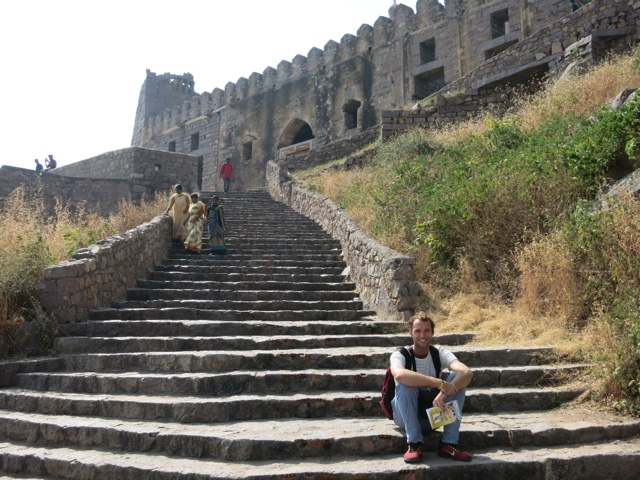
Hyderabad, used to be subject to the Mughal throne in Delhi, but ruled by the Nizams who first depended directly to the Mughals, but with their later decay, became independent and during their 8th successive dynasties amassed what was estimated as the biggest personal fortune on earth. Part of Hyderabad's wealth came from the famous diamond mines of Golconda, once the only known source of diamonds and described by Marco Polo as the flower of the diamonds and other large gems, as well as the largest pearls, are all carried to the great Kaan and other kings and princes of those regions. In truth they possess all the treasures of the world. The vaults of Golconda once stores stones such as  Koh-i-NoorHope DiamondDaria-i-NoorNoor-ul-AinPrincie DiamondRegent Diamond & Wittelsbach-Graff Diamond. Drawn by the name and its historic associations, we first visited the fort of Golconda in the outskirts of Hyderabad. The inmense fort surrounded by walls and moats was ruled by merciless but rich Muslim rulers and as the key to the conquest of the Deccan Plateau, was the thorn eye of the Mughals in Delhi. The fort counts with impenetrable defense systems, incredible water reservoirs and supply systems, palaces and zenana quarters for the ruler's wife and concubines. The fort could not be conquered but finally fell at the hands of bribery after which the vast riches in the form of diamonds and other precious stones were plundered. Golconda fort is mainly visited by domestic tourists who come and bring an offering in the newly painted Hindu temple and then dedicate most of their time taking selfies, climbing walls and grafittying this old Muslim heritage. While Hyderabad has always been predominantly Hindu population, the state has been ruled by rich Muslim dynasties and nobles. Is this slow destruction of this heritage a revenge of time?


Sin solución alguna, salimos en busca de otro hospedaje. En la calle solo había vendedores de té,algunos puestos de diarios, perros callejeros y claro algunas ratas dando vueltas. Caminamos por calles totalmente vacías, cuando de pronto a lo lejos vemos un cartel viejo que decía HOSTEL, al cual nos dirigimos. 
Apenas nos acercamos a la puerta, sale un señor muy amable que nos invita a pasar y tomar asiento y nos empieza a contar la historia de cómo construyó ese hospedaje y sobre sus hijos estudiando y trabajando en el extranjero. Después de 10 minutos, Johan acompaña al recepcionista a ver una de las habitaciones y al bajar me dice: "no está mal, esta aceptable". Tuve mis sospechas de que algo no me gustaría, ya que mis estándares de "aceptable" son bastante más altos que los de Johan... Y no me equivoque. Cuando subí a la habitación que Johan ya había aceptado, me encuentro con una habitación impregnada a olor de cigarro, las paredes "blancas" totalmente manchadas, el piso lleno de polvo, las sábanas de las camas claramente no estaban limpias, hasta pelos tenían. Mi primera reacción claramente fue lanzar a Johan la mirada de "desaprobación" y luego pedir al recepcionista que cambie las sábanas. De pronto, el recepcionista me dice que estaban limpias... Que las "acababa" de cambiar. Todos mis esfuerzos por mantener mi serenidad se fueron al diablo. Sentí como me hervía la sangre y le dije a Johan: "Nos vamos! Yo no voy a dormir en un lugar así, esto está asqueroso!" De pronto sale un señor en calzoncillos largos de la habitación del costado, y me pregunta que estaba ocurriendo? Por qué los gritos? Le dije que estaba reclamando por unas sábanas limpias, que la habitación en su totalidad estaba sucia y que al menos pedía sábanas limpias en la cama. El señor, ordenó al recepcionista traer nuevas sabanas y me pidió que no me fuera. Nunca supe quién era ese señor, si sería familiar del dueño, o un simple huésped que se hizo cargo de nuestro reclamo. Respiré profundo, y sin ganas de gastar energías en discusiones sin sentido, deje mi mochila en el piso, me cambie de ropa y salimos a conocer la ciudad en lugar de permanecer más tiempo en esa habitación a la que bautizamos: La Pocilga, después de haber encontrado una manzana podrida detrás del lavamanos del baño. 


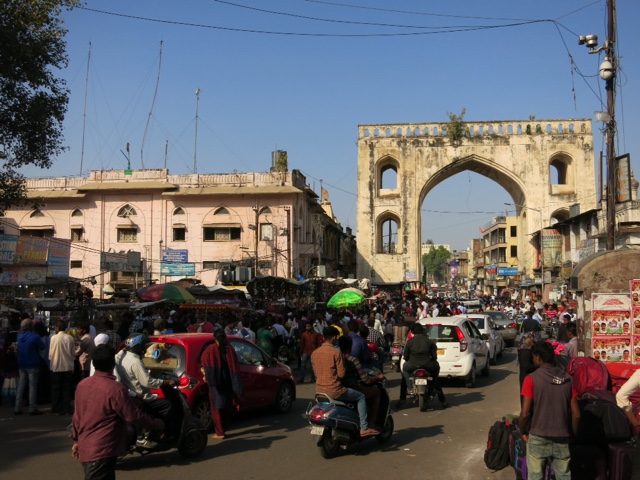
After visiting the fort, we continued to the park of the beautiful Islamic tombs of the Qutani dynasty, marvelous mausoleums were sultans and princesses are buried and their legacy preserved to humankind in the form of blue domes and tile work. We then headed back to the city of Hyderabad, constructed by the rulers of Golconda to solve their water problem, and when we got off the bus we were all of a sudden immersed in the famous Hyderabad bazaars, with dedicated passages for bangles, copper pots, animals, perfumes, wedding dresses, pearls and much more. After a simple but delicious dinner we left the bazaar crowd and hopped in a taxi for a night in "the possilga". Everything changes though with a mosquito net, a game of scrabble and a bottle of ice cold sparkling water, and after a few games we went to sleep and survived the night without being disturbed by rats or bedbugs. Early morning though, before heading back into town, we changed hotels to a slightly more upscale place.


Fuimos a conocer el fuerte de Golconda en las afueras de la ciudad. Bajamos de nuestro tuk tuk, y el sol estaba justo dando en la cabeza. Era un día caluroso. Empezamos a escalar el fuerte, donde éramos los únicos turistas. Era una construcción en su mayoría hecha a base de piedra. Muros y arcos en piedra, escaleras en piedra, reservas de agua vacíos, cubiertos de un poco de agua de lluvia y maleza que había crecido. 
Decenas de familias Hindu visitaban el fuerte, fuerte que en sus orígenes perteneció a dinastía de Musulmanes... hoy se reemplazó uno de los espacios por un altar a un dios Hindu, que es al que vienen a dejar ofrendas los visitantes. Pero fuera de este espacio con el dios Hindu, es triste ver cómo no hay ninguna conciencia o respeto por los monumentos antiguos, al menos en este caso. Muchos jóvenes que asistían al lugar, escalaban muros que ya estaban en deterioro y estructuras vulnerables a cualquier peso. Peor aún, otros pintando grafitis en algunas paredes con nombres y fechas de la visita. Otros con la punta de un lápiz intentando escarbar en las paredes y dejar su "huella". Por la tarde continuamos nuestra visita hacia un parque lleno de Mausoleos islámicos. Enormes tumbas hechas en mármol, en el techo de los mausoleos podías ver en lo alto las cúpulas redondas. Muchos fieles (musulmanes) acudían a este parque a sentarse bajo la sombra de algún árbol y disfrutar del ambiente de paz. 


Again we headed into town and this time to the half restored Chowmahalla Palace, where many of the Nizams had spent their lives among hundreds of servants, eunuchs, concubines and wives. Where lavish buffets were held, where vaults of diamonds and cellars of bullion and cash were stored, where oriental intrigue reigned, where the Nizam rulers after being sidelined by their prime ministers or the British were more interested in opium, scotch and hunting than in ruling their estates. A few of the objects and many pictures recreated these years of these Muslim potentates, creating a sense of despise for the waste and life in decadent luxury without regard for their sometimes miserable subjects but at the same time of marvel about the exotism and thousand and one night anecdotes about rubies, emeralds, diamonds, peacock, poetry, opium, ivory, pearls, spices, incense and everything that smells of romantic orientalism.


Local breakfast

Una de las cosas que llama mucho mi atención y que decidimos visitar en cada país, son los antiguos bazares. Hyderabad es famoso por el comercio de piedras preciosas y esencias de perfumes, por lo que toda una tarde nos aventuramos en internarnos en esa jungla de brazaletes, cadenas de oro, perlas de colores, perfumes, esencias, accesorios para el cabello, todo tipo de prendas de vestir, etc. Con Johan durante el viaje evitamos estar comprando cosas, ya que lo último que queremos es tener que andar cargando con peso en la mochila, pero ... Qué tanto peso podía aportar un par de frasquitos de esencia de perfume y un par de aretes de perla cultivada en tono palo rosa? Nuestro primer paseo sirvió para reconocer el lugar, situarnos, ver lo que nos interesaba. La segunda vuelta, fue para ingresar a las tiendas, preguntar precios, comparar calidad de piedras, probar perfumes. La tercera vuelta fue para dirigirnos a los que nos habían dado confianza y preguntarles directamente cómo podíamos reconocer una perla verdadera de una falsa y lo mismo con las esencias de perfume, para lo cual, los dueños de las tiendas muy entusiasmados como quien daba una cátedra en la universidad se explayaban explicando cómo detectar algo de buena calidad. Luego de un break en una tetería famosa en Hyderabad, donde he probado el té con leche cremoso más delicioso en todo India y la porción de galletas más ricas para remojar y acompañar el té... Nos dirigimos a las tiendas donde habíamos detectado que vendían esencias de perfume de calidad y perlas originales donde además el vendedor era un señor encantador y amoroso, feliz y agradecido de ver extranjeros visitando su ciudad. 


India is one of the countries where 21st century modernism is probably advancing at the quickest pace but also where it is most easily forgotten when walking into its streets, driving through its villages or visiting its temples. We indulged in a session of proper 16th century orientalism and went shopping in the bazaars for pearls and perfume essences in the Nizams court suppliers. Shops run for many generations by the same family were attended by proud shopkeepers, seated on big pillows in their shop fronts. We made a tour through different shops learning everything about the cultivation, setting and quality of pearls, as well as the spectrum of essences, their applications and their origins and although we vowed to keep buying to a minimum on this trip, found our bag filling up with pink and white, round and tear shaped pearls and essences from roses, cedarwood, musk, violet, lemon etc. We enjoyed the bargaining, we appreciated the work of this traditional vendors, their knowledge, their truths and their half truths and we marveled at our purchases. We were merchants on the Silk Road and would make a fortune selling our pearls and perfumes back in Europe.


Al ser una ciudad donde gran parte de su población es musulmana, hicimos un recorrido por las mezquitas de la ciudad. La principal era una mezquita grande, con un patio en el frente muy amplio, una pileta donde la gente se lava los pies antes de entrar a rezar. 
Nosotros estábamos muy tranquilos sentados en una banca de cemento observando a la gente pasar, otros leyendo y recitando el Qoran en voz baja, otros recostados haciendo la siesta. 
Decidimos dar un paseo por los alrededores del salón principal donde no estaba permitido nuestro ingreso, y nos topamos con una familia de musulmanes que estaban haciendo picnic en el pasillo que conectaba el patio frontal con la parte trasera de la mezquita. Ellos al vernos inmediatamente empezaron a preguntar de dónde éramos y a hacernos conversación. Finalmente, terminamos sentados con ellos comiendo un plato con arroz y currys encima. 


The next day we visited the residence of the British resident in Hyderabad, now part of the Osmanian College for women, on the UNESCO list of one of the 100 most endangered heritage buildings and currently in a first stage of restauration. The mansion was constructed by governor Kirkpatrick who fell in love with one of the Nizams nieces and in order to marry her converted to Islam, started wearing silk robes, smoked water pipes and only survived the governor's scrutiny because he could read the Nizam as no other Brit. The building, built at expense of the Nizam, was first presented to him on a big plan and rejected because it could not be bigger than his palace. The same palace was then presented on a much smaller sheet, simply reducing the scale of the drawing, and was approved this time, counting with 2 entrances, one designed for the arrival and reception of the Nizam and his elephants, the other one to receive British dignitaries. We then headed back to the bazaars and went for more pearls and more perfume, more chitchat with the merchants and more tea and Osmanian biscuits in the bazaars tea houses. As usual in these big Muslim cities, we visit at least the main mosque for a look around, a few minutes of relaxing and meditation about the purpose of life in the always tranquil but lively atmosphere. This time we were invited for lunch by an Indian family who had come with at least 4 households to buy supplies for a coming wedding. We sat down in the mosque courtyard, ate rice and chutney, answered questions through the 12 year old translator and posed in many selfies and then got up and headed on. 


Hyderabad, sin duda una ciudad a la que volvería y no solo por sus bazares que me encantaron, si no también para volver a visitar sus palacios, disfrutar del té cremoso y galletas en ese local sencillo pero lleno de gente en la esquina del bazar, para recorrer los restaurantes y probar los Biryani, curry de cordero, el pollo con salsa picante. Volver a dar un paseo por la ciudad moderna y caminar a la orilla del lago mientras esperas la puesta de sol. 
Llego el momento de despedirnos de Hyderabad, ir al hospedaje por nuestras mochilas, luego al paradero de buses, hacer maniobras para subir al bus lleno de gente con nuestras mochilas en la espalda, donde felizmente en el área de mujeres un par de muchachas nos cedieron asiento y nos ayudaron a identificar el paradero donde debíamos bajarnos. Nos vimos una vez más en una estación de trenes, nos esperaba una noche larga antes de nuestro siguiente destino. 


I loved Hyderabad. It is one of these cities with a big role in history but almost forgotten, way to far off the regular itinerary for mass tourism but where tourists are welcomed with open arms. I loved this city of Muslim heritage, bazaars and good food but after oriental potentates, it was now time for another type of fellow humans. Another train marathon to the tribal areas of Jagdalpur deep in landlocked Chattisgarh