martes, 7 de marzo de 2017

Mysore, the City of the Palaces


We arrived in Mysore early morning and after a shower and a proper breakfast in one of the local South Indian cafees, we headed for the Mysore palace. A fabulous building where yet another dynasty of Rajes lived in mind boggling luxury. The architecture of the palace, built in the 19th century, joined the best Indian, Islamic and European styles and materials, including glass work, chandeliers, ceramic tiles, rosewood, teak and magnificent ivory carved doors. We made a tour through the palace and again this time the audio guide provided didn't let us down.  Most of these dynasties were tolerated by the British as local leaders as long as there was no major disturbance or interference with economic policies and these dynasties continued to rule mostly till 1971 when Indira Gandhi abolished the Rajes. Pictures of the most modern Raj showed a hybrid between ancient elegant Indian style clothing and modern additions such as Rayban sunglasses and a short ringbeard. We had lunch in the same café, where delicious south Indian dishes were served as well as proper coffee. While both North and South Indian food are known all over the world and while I consider both delicious, I found South Indian food to be much more accessible with small decent restaurants, so called hotels, full of locals and with hygienic conditions at first sight everywhere, in stations, in city centers, on small back roads etc while simple but good restaurants seemed harder to find in the North. 


Llegamos temprano a la ciudad de Mysore, conocida por la cantidad de Palacios que hay en ella. Motivo por el cual, después de desayunar nos fuimos a visitar el Palacio Real de Mysore, donde vivieron distintas dinastías. El Palacio, con pasillos de techos altos, puertas de metal y madera, con figuras de elefantes talladas en ellas, un par de cabezas de elefante colgadas en los muros de las entradas, cuál trofeo... producto de caza de elefantes. En el interior del Palacio, ibas pasando por pasillos decorados en cerámicas coloridas, con lámparas colgantes de cristal, ventanitas desde donde podías observar patios interiores. Los salones donde el Rey llevaba a cabo sus reuniones, eran amplios espacios con columnas en dorado y turquesa, los techos en forma de cúpula en tonos dorados también, espejos en todo el entorno hacían dar la sensación de que el espacio era mucho más grande de lo que se apreciaba. Eran salones lujosisímos, todas esas lámparas colgantes de cristal, que con el juego de luces parecían cambiar de color conforme ibas avanzando. En las afueras del palacio, habían grandes jardines con flores de todos los colores, rosas, y gente regándolas y trabajando en la mantencion de las mismas. Pasando los jardines, había un sendero que terminaba en unos establos a lo lejos, empezamos a caminar por el sendero cuando de pronto nos percatamos que en el establo no eran caballos lo que tenían, sino elefantes... Para mí fue una pena, ya que los elefantes estaban atados de una pata con gruesas cadenas que no les permitían moverse ni un paso, la cadena no tenía más de 50 cm de largo... A penas el guardia nos vio llegar, se nos acercó y pensé que nos pediría que nos retiremos pues no era una zona permitida para visitantes, y en lugar de eso nos preguntó si queríamos una foto con los elefantes, los animales no lucían felices y me percaté que empezaron a ponerse incómodos e inquietos al ver al guardia acercarse (quien sostenía un bastón de madera en la mano con lo que seguramente los adiestran) por lo que dijimos no gracias y nos retiramos del Palacio. 


After a stroll over the local market in the early morning we headed to the local sandalwood factory. Sandalwood, again one of these oriental commodities traded between east and west and that fascinates me, is used for carving but mostly known for its oil and aromatic properties being worked in incense, soaps and perfumes with a very characteristic smell. While a traditional Indian craft, nowadays all sandalwood trade in India is regulated through the government and the cultivation, processing and production of oil is a state monopoly, in order to protect the sandalwood tree from extinction. While first diverted to a local silk and sandal souvenir shop and an another fight with the tuktuk driver, we were then driven to the Karnatakan government owned sandalwood oil factory just out of town, where upon approaching the exquisite aroma welcomed us from afar. Before entering the factory but after a necessary series of Indian bureaucratic steps, Thomas bumped into the low hanging door leaving an ugly hash in his forehead bleeding heavily. He first was attended by the gardeners, washing his head with a garden hose, than by the employees of the factory who came running out treating him with cottons and finally, with a still bigger crowd around was put a bandage on his head by, who appeared from the whispers in the crowd to be the general director of the department of the sandalwood oil factory from the Karnatakan government. After this helpful and well intended but hallucinating bureaucracy and demonstration of hierarchy, we had a short but interesting tour ending in the purchase of a few bars of soap which made our backpacks smell for the following weeks.


Una de las características de India son los aromas que puedes experimentar, para mí los que siempre traerán a mi recuerdo India son: olor del masala que es la mezcla de varias hierbas, pero en aromas predominan: ajo, jengibre y muuucho comino; el olor del incienso, era algo típico al entrar a cada templo o en las calles también; el olor de orina... yo sé que no es muy agradable que digamos, pero era típico que mucha gente tome como baño publico algunas paredes en la calle, o esquinas... Y bueno al que le tocaba pasar por ahí se ganaba con el aroma..., el olor del aceite de coco que usan mujeres y hombres para mantener el brillo en el cabello, y finalmente el aroma de Sándalo, esto podías sentirlo en el bus cuando de pronto se te sentaba al lado alguien que parecía recién bañado y andaba oloroso a sándalo. En Mysore, había una fábrica de jabones de aceite de Sándalo, la cual decidimos visitar para enterarnos del proceso de la extracción del aceite de la madera, luego utilizado en la producción de jabones de distintas calidades, las cuales varían según el porcentaje de aceite utilizado en el jabón. 
La visita fue interesante, y aprovechamos en comprar una muestra del jabón para andar igual de aromáticos que los locales... Pero la atención se vio centrada en Thomas, cuando al volver del baño, veo que se frotaba la frente y de pronto una línea de sangre corría por su cara. El pobre se había dado tremendo golpe con la esquina de la puerta al salir (las puertas no están hechas para personas altas) y ahora tenía una abertura en la cabeza que sangraba como manguera de bombero. Todos nos preocupamos, pero más aún el personal de la fábrica de jabones, de pronto nos vimos rodeados de gente todos queriendo ver la herida, otros aplicándole agua, limpiándole con algodón, otros traían polvos curativos, hasta que apareció el manager del establecimiento y fue quien aplicó un polvo mágico curativo y puso una gasa a nuestro amigo. 


Mysore is full of palaces of all the dynasties and kings that residid there and governed this part of the country. Some of the palaces are main tourist attractions, others are museum, some are in a deplorable state and yet others are privately owned, restored and converted in restaurants and hotels. As per Thomas suggestions and happily coinciding with our 5th anniversary, we indulged in a bit of oriental luxury, in a 4 star hotel, built by one of the Rajes for his British guests. In a beautiful mix of Indian architecture with European influences and materials we enjoyed pool side reading and gin tonic, stylish courtyard dining and a hot bath soaking off 5 months of Asian dust. Leaving all ethical considerations on colonialism and politic correctness aside, being a British officer in the great days of the empire must have been adventurous and beautiful and we gladly absorbed this feeling in our Mysore palace stay. The soft mattress took us to the deepest of sleeps but after breakfast and a very stylish checkout, we stood back on the street, backpack strapped, haggling for a tuktuk to the bus station destination Madikeri.


Y bueno, ya que estábamos en la ciudad famosa por sus palacios... A Thomas se le ocurrió la brillante idea de alojar una noche en alguno de los antiguos Palacios que hoy funcionan como hoteles (extraño tu compañía Thomas, vuelve para poder alojarme otra vez en Palacios). La fecha que decidimos alojar en el Palacio, justo coincidía con nuestra celebración de 5 años juntos, así que fue como nuestro regalo de aniversario poder disfrutar de las instalaciones de un hospedaje de alta calidad y servicio. Recuerdo que llegamos por la tarde, nos dedicamos a disfrutar del ambiente del palacio, nos dimos un baño de tina usando todos los frasquitos que nos habían puesto en la bandeja del baño, geles de baño con olor a sándalo, shampoo y crema de pelo con olor a manzana, crema de cuerpo olor a pera... (se preguntarán por qué me entusiasma tanto el darme un baño con geles aromáticos y jabones líquidos, si es algo tan "normal" jaja ... Y sí, era normal para mí cuando vivía en Chile, tenia un hogar y recibía un sueldo con el que me daba mis gustos de comprarme ese tipo de cosas, pero ahora que andamos en modo "viajero" las prioridades han cambiado, y lo único que se compra con aroma es desodorante y shampoo) Por lo que después de la sesión de baño de espuma, salimos de la habitación bien aromáticos y listos para disfrutar de una y cena a la luz de las velas en la terraza del palacio. A la mañana siguiente, después de disfrutar de un desayuno bufete, disfrutamos un rato de las instalaciones del jardín y piscina, antes de tener que hacer el check out, ponernos nuevamente las mochilas polvorientas en las espaldas... Y los lujos del Palacio para estar parados en la esquina de la calle esperando subir a un tuk tuk en el que estaríamos bien apretados con mochilas encima, con destino a la estación de buses para tomar un bus que nos llevaría a Madikeri. 


viernes, 3 de marzo de 2017

Goa Beach and Hampi Ruins


I knew, or thought I knew, Goa as a beach full of hardcore party and I wasn't sure if I wanted to go there, so when Thomas suggested to spend a few days in Goa, I wasn't fully convinced. But a few beach bungalows, deserted and clean beaches, Portuguese and Dutch trading history, beautiful inland reserves and most of all Goan sausages later, I had completely changed my mind and thought it as one of the places to come back further in life. We arrived at a small train station in the middle of the night with no rickshaws but at least a hotel reservation, so we started walking and soaking up the clean cool air and the exquisite night temperature. We even found an open bar on the beach and had a few drinks till about 3 AM in the morning, a novelty for us in Indian terms.


Llegamos a Goa, bastante cansados (al menos yo) después de haber estado viajando en el tren alrededor de 10 horas. Al llegar a nuestra estación ya era de noche y la escena era todo lo contrario a lo que habíamos esperado. Esperábamos un montón de gente en la estación, muchos taxi y tuk tuk peleándose por querer llevarnos a la zona de hospedajes en la playa, pero no, solo nos acompañaba el canto de unos grillos, la luz de la luna y un par de vacas en el camino. Decidimos caminar (3km aprox) hacia la zona de la playa donde habían todos los hostales y bungalós (no nos quedaba de otra en realidad). 
Una vez ya instalados en el hospedaje decidimos ir por unos tragos al único bar que aún estaba abierto frente al mar, nos sacamos las zapatillas, caminamos descalzos por la orilla del mar, pedimos unas cervezas y nos sentamos en la arena a escuchar las olas, iluminados por la luna, celebramos el inicio de nuestros días de relajo y descanso en la tan famosa playa Goa. 


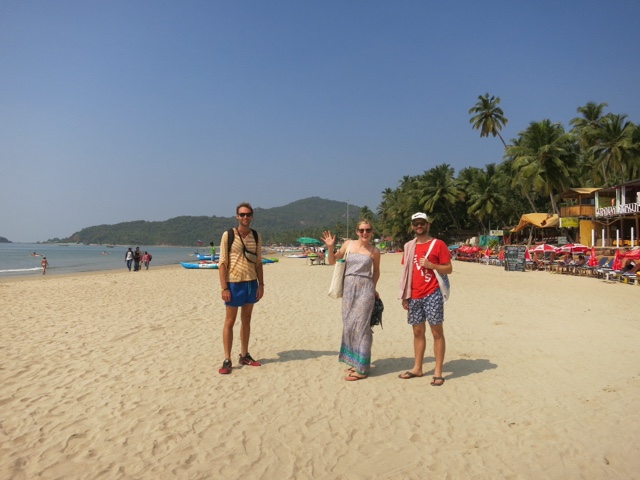
The next day was just about reading, chilling, soaking up the sun, swimming in the exquisite water and having some food and drinks on the beach. Off all the towns and beaches (I just learned that Goa was a region with tens of different beaches) we had chosen Palolem beach which was populated without being overcrowded, was clean (an indispensable requirement after the state of the water bodies we had seen in India) and had a nice and easy going atmosphere. We watched the sunset from a kayak on the water although we couldn't find the dolphins that were supposed to be there. 


Al día siguiente, partimos temprano en busca de un bungaló frente al mar... Encontramos unas cabañas muy cómodas un poco alejadas de toda la movida turística pero aun así a 10 metros de la playa. El primer día nos dedicamos a disfrutar de la playa, tal cual panza arriba recibiendo baños de sol, disfrutando de un par de bebestibles en la reposadera, leyendo bajo la sombrilla, dándonos de vez en cuando un chapuzón en las cálidas aguas de la playa de Goa. Para mi grata sorpresa la playa era bastante limpia, la verdad es que tenía un poco de temor de cómo podría ser una playa en India y más aún si era destino turístico tanto de locales como extranjeros... Pero fue bastante más limpio y organizado de lo que imagine. El agua limpia, sin bolsas plásticas ni comida flotando que era lo que más o menos esperaba.


The next day, after a relaxed and continental influenced breakfast we hired scooters, with the necessary fights and arguments about why all 4 of us needed a helmet and set off for the nearby nature reserve. After paying our ticket at the entrance, we were warned by several signs and the reception lady about what to do in case of encounters with leopards, bizons, tigers, wild dogs and snakes. Only few minutes in the reserves, we already encountered groups of monkeys in the trees. This time, in their natural environment, they seemed wonderful creatures jumping from tree to tree often covering distances of more than 5 meters flying through the air. But apart from a few cows and birds, this would be the only wild life we saw. Nevertheless, we enjoyed the walks through this jungle like environment and being in nature after 2 weeks of Indian cities. On the way back to Palolem, we suddenly lost Thomas after passing a police control and upon returning figured out that he had not only been stopped but also had his motorcycle confiscated for using a white number plate (not allowed for rental). Obviously unaware of this rule, we waited for the owner to solve this, or better his, problem the Indian and Thomas was not in custody but back with us.


A unos cuantos kilómetros de la playa de Goa, había una reserva nacional donde podíamos ir a hacer una pequeña caminata y con suerte poder ver algunos animales silvestres como por ejemplo leopardos, culebras, perros salvajes, osos  y más. Nosotros arrendamos un par de motocicletas y nos dirigimos a la reserva nacional. Caminamos por un sendero, donde los monos iban saltando de rama en rama, más de una vez nos asustamos con el ruido que hacían los monos y pensamos que se trataba de otro animal más grande, pero no... Lo único que vimos fueron monos juguetones y algunas vacas. Vimos algunas huellas de algún tipo de felino, cerca de unos pozos naturales de agua, pero solo eso huellas. Quizá fue mejor, no sé qué hubiese hecho si veía aparecer un leopardo, aún no desarrollo la destreza de trepar árboles.  


Led by Thomas, we followed the footsteps of the Portuguese in Goa, which remained Portuguese till 1961, when the treat of sending the Indian army was enough to send the Portuguese home without further resistance. Nevertheless, the Portuguese influence is not just visible in the many churches and architectural relics but also in the food, in some of the faces, in the street and family names. Our first stop was old Goa, the first Portuguese capital, abandoned due to malaria and cholera epidemics but today full of churches, basilicas and convents. Under a blazing sun, we visited the several highlights fully illuminated by background information provided by Thomas' profound knowledge on the local history and how the Portuguese battled, suffered, lost and won, despite being largely outnumbered and in the name of the catholic faith as a disguise for enormous greed, against the local Muslim rulers.


Además del atractivo de las playas de Goa, está la ciudad antigua donde se establecieron los portugueses por muchos años. La ciudad está repleta de casas estilo portugués, iglesias y conventos. Callecitas estrechas en piedra, casas pintadas de colores, los techos con tejas y palmeras por todos lados. Muchos cafés y restaurantes al estilo portugués. Todo el recorrido turístico fue guiado por Thomas quien cada noche estudiaba el discurso y preparaba la ruta turística para el grupo. (Gracias Thomas por haber sido de guía) 


We then headed to Panjim, the second Portuguese capital where we walked the cobblestone backlanes with beautiful Mediterranean mansions and painted houses. If it were not for the motorbikes and the honking of horns, one could be strolling through any small town on he Portuguese Atlantic coast in search of a glass of crispy white wine and some grilled sardines. This brings me on the food track and obliges me to bring homage to the fabulous Goan sausage. A dryish sausage used in stews or other warm preparations, of smoked pork meat with local Indian spices. After abstention from such delicate cured meat preparations these few mouthfuls of shared starters were mouthwatering and brings this dish in the hit list of the food eaten on this trip.


Nuestro último día en Goa, decidimos arrendar las motos nuevamente e irnos a recorrer un poco por la Costa, pasando por distintas playas y pueblitos. Paramos en una playa llamada "Turttle Beach", donde entre los meses de diciembre a febrero las tortugas vienen a poner sus huevos en la arena y en marzo puedes tener la suerte de ver a las tortugas bebe correr hacia el mar. No estábamos en esa temporada, pero aun así disfrutamos de un día relajado, recostados en la arena, leyendo, bañándonos en el mar... Aprovechando que éramos los únicos en la playa. 
A la hora de almuerzo, fuimos a un restaurante chico ahí mismo en la playa, cada quien pidió comida "sea food" pero el que no deja de sorprender es Johan, que se pidió un Cangrejo ENORME a la BBQ, era muchísima comida la que sacaba de ese cangrejo... Y la disfrutaba como si fuese lo último que iba a comer por el resto de la semana. Yo creí que no iba ser capaz de terminarse ese cerro de comida, pero me equivoque... Dejó el plato limpio. 


A last day on the Goan coast, took us on the back of a motorbike through beautiful inland roads bordering bird rich estuaries and flanked by beautiful Portuguese villas, to the remote turtle beach with only a few people, crashing waves and a few strips of shadow cast by a few pine trees. We treated ourselves to a seafood lunch with local oysters, clams and a crab in a delicious curry, though getting the meat out of the crab shell consumed probably more calories than the intake. Happy and with a full stomach we cruised back to our huts for a shower and got going for a nightly bus ride to yet another UNESCO world heritage site, Hampi.


De Goa partimos en un bus nocturno hacia Hampi. Debo decir que el bus nocturno es una de las peores alternativas que podemos elegir, al menos en Vietnam, Laos, y ahora India pasa siempre lo mismo. Los choferes van a tal velocidad que cuando agarran las curvas les es imposible reducir la velocidad y por lo tanto el bus se inclina de un lado a otro, haciendo que todos los pasajeros en el interior rodemos de izquierda a derecha en las camas. En conclusión no duermes nada porque te despiertas cada vez que te encuentras con una curva en el camino. Llegamos a Hampi, un sitio reconocido por la UNESCO como patrimonio del mundo. Al llegar al paradero, vi que en la puerta del bus nos esperaban alrededor de 30 personas (hombres) y todos se te abalanzaban encima tratando de agarrarte del brazo llevarte a un lado y ofrecerte hospedaje, tours, etc. Yo con sueño y cansada, baje las escaleras del bus agarrándome de la mochila de Johan para no quedar atrapada entre la multitud, aun así se me tiraron encima intentando agarrarme del brazo, yo empecé a gritar: Dont touch me!, Dont touch me! I Dont Want anything! (todos me dejaron en paz, y pude continuar y unirme al grupo). 


The nightly bus ride was another experiment on the effect of excessive three dimensional accelerations on the human body. Although we were lying completely flat, in a curtain covered cubicle, there was not much chance to sleep but after a breakfast and a refreshing shower in the morning we felt ready to visit the ruins of the old Indian kingdom of Hampi. We rented four bicycles and as 3 good lowland Europeans and an obliging Peruvian we set off in direction of the ruins, with a few steep climbs for a start and a strong sun watching over us. The ruins of Hampi are a collection of mainly temples but also palaces and supporting infrastructure such as water reservoirs, elephant stables, baths, gathering rooms, bazaars and aqueducts. Apart from being yet another mighty Indian civilization, the main characteristic is the endless number of beautiful carvings in the red sand stone on all the buildings, surrounded by scenic rock formations, the desert landscape and the green vein of a river flowing through. Again, I had the impression that not too much about the history of the sites was known but that couldn't hold us back from speculating and absorbing the scenery from our bicycles. After a thali lunch, a set meal consisting of rice, some vegetable curries, Indian breads, curd and lentils, and a cup of tea we were ready for the afternoon round and cycling through one of he old gates, watched over by temples on the high ridges and peddling over what at some stage must have been the Champs Elysees of Hampi, we got to the temple complex with the famous stone chariot. We finished our tour cycling and walking our bikes over the rocks and along the river while the setting sun colored the red stones even redder. After a healthy dose of naan bread and curries, we got on yet another night train taking us to the palace city of Mysore.


En Hampi, los Belgas decidieron hacer la visita por el complejo de templos en bicicleta y como eran mayoría no me quedo otra que acompañarlos. Y no es que no me guste andar en bicicleta, pero como venía saliendo de la contracción muscular del abdomen, y ya había visto que los caminos eran subidas y bajadas, no me animaba mucho la cosa... Pero aún así los acompañe. Visitamos muchos templos, ruinas, Palacios... Todo en su mayoría hecho en piedra tallada. Los detalles de cada muro eran realmente impresionantes. Me gusto muchísimo el paseo por Hampi, a pesar de que sufrí varias colinas (en la subida) pero con la ayuda de Johan que venía por detrás y me empujaba por la espalda para darme más velocidad, iba bien. 
En los templos, habían monos jugando por todos lados, algunos peleándose, otros abrazándose, algunas ardillas trepando los muros en los palacios y algunas vacas flacas que parecían pérdidas caminando entre los muros de los templos. Después de nuestro recorrido por Hampi, por la noche estábamos tomando un tren con destino a la ciudad de Mysore. 


domingo, 26 de febrero de 2017

Mumbai, India


Arriving in Mumbai, or the ancient Bombay, situated on a peninsula, I suddenly figured out that I didn't have my reservation on my iPad, nor did I load my maps and that I didn't have a clue where to go to in this enormous city. So we sat down for lunch and a helpful young boy shared his internet connection with us upon which a Nepali cab driver took us to the Mumbai fort area. Our hotel, despite only cold water and a few rats in the hall, was love at first sight as I loved the interior, designed for, what I imagine, could only have been a young British merchant in search of adventure and fortune. The simple interior and infrastructure that reminded me of my university residence, a call for tea at 6.30 in the morning, and a call for the newspaper at 7, located in the green and quiet area of the old British port and customs area. We went for a stroll through our neighborhood and watched the sun set over yet another sea in our travels, the Arabian Sea. In the evening we went to a local movie theater, which looked much as ours do, and watched a new Bollywood movie, perfectly understandable due to a mix of Hindi and English and the not very deep or complex storyline. The movie is set in Goa and Paris, treats about choices in love and careers in the film industry, doesn't show any glimpse of rural India or one of its more than 300 million people living below the poverty line and a main character drinking wine, going to party, talking on an iPhone and working on a MacBook....and people love it.


Victoria station, now renamed to central station 

Mumbai o Bombay fue nuestra siguiente parada en el recorrido por India. Es la capital financiera de India, de camino a nuestro hospedaje pude observar muchísimos edificios en remodelación y construcción, pasamos por barrios antiguos correspondientes a la colonización. Es una ciudad grande, por lo que una vez más nos vimos en medio de masas de gente, a donde fuéramos. A pesar del típico caos que uno suele encontrar en las grandes ciudades, a mí Bombay me gusto, quizá el hecho de tener el mar cerca ya hacia que el ambiente se sienta distinto, más "relajado"... Poder ir a las 4:30 de la tarde al malecón, sentarse junto a todos los locales y esperar la puesta de sol, fue algo que realmente disfrute. Claro, de vez en cuando pegaba un grito cuando veía aparecer una rata entre las rocas donde estábamos sentados, pero con el tiempo nos fuimos acostumbrando a verlas pasear por nuestro alrededor sin alarmarnos tanto. En nuestro hostel, la habitación tenía ducha, pero no inodoro, por lo que cada vez que querías ir al baño había que salir, atravesar un pasillo poco iluminado, donde al finalizar doblabas a la izquierda y ahí habían 4 baños estilo Hindu, (conocido también como French Toilet, un agujero en el piso) el tema es que en una de mis paseos al baño, vi que se me venía en contra una rata (enorme) en pleno pasillo oscuro, al  verme se mete debajo de un sillón viejo que estaba antes de llegar a los baños, desde entonces todas mis visitas al baño las hacía corriendo y saltando al ver el menor movimiento o sombrita a mi alrededor. 


The next morning we had breakfast with my good friend from high school, Thomas, and his girlfriend Chloe who had come from Belgium to visit us and to join us on our trip from Mumbai to Kochi in Southern India. Our first day we enjoyed strolling around the main tourist spots of Mumbai, taking our time for lunch to catch up and walking to the seaside. In a first impression, I didn't find Mumbai as hectic as Delhi and liked the cosmopolitan vibe of the place. Then again, we had only seen a fraction of this city whose total population is bigger than the population of Belgium. When our guide picked us up the next day, we knew we would see another face of this city, Dharavi, one of Mumbais biggest and oldest slums with an estimated population over a million. Our trip started with a ride in the Mumbai local train, beginning from the starting point with an empty train from the elegant Victoria Station and finishing in Mahim station on the middle of the line were we had to elbow to get off and where it looked exactly like its stereotype image of the Indian suburban train with wagons bulging with people and people hanging out of the doors. 


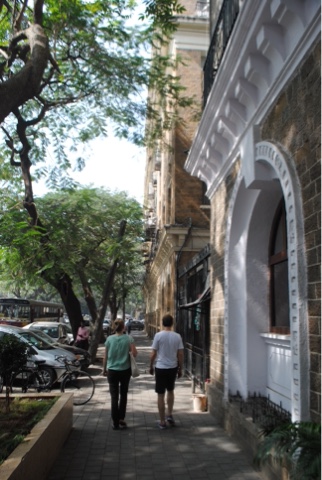
The British fort area around our hotel

A la mañana siguiente, salimos temprano a darles el encuentro a Thomas y Chloe quienes habían viajado desde Bélgica para acompañarnos unos días en nuestra ruta por India. Después de tomar desayuno, fuimos a caminar por la zona turística de Bombay, los barrios antiguos, parando de vez en cuando en uno que otro café/ bar y terminar en el malecón donde una vez más esperamos hasta ver la puesta de sol. Una de las actividades que más me impactaron en nuestra visita por Bombay, fue cuando tomamos un tour a uno de los Slum de la ciudad (los Slum en India, son las poblaciones más pobres, comparado con las "favelas" en Brasil). Fue toda una experiencia de inicio a fin, desde que nos encontramos con nuestro guía y nos dio todas las indicaciones y advertencias posibles, luego tuvimos que abordar un tren local en el que al inicio había espacio para sentarse, pero que al cabo de 3 estaciones, ya no entraba ni un alfiler, era tal cual y cómo se ve en las películas de India, el tren estaba repleto, la gente en su mayoría hombres parados en las puertas sujetados de una baranda y con mitad del cuerpo afuera mientras el tren estaba en movimiento. Ni que decir de las miradas penetrantes de los pasajeros, pero como andábamos con un guía local que constantemente me preguntaba: "todo bien? Si te sientes incomoda, avísame"... Me daba cierta seguridad y no me dejaba intimidar por aquellas miradas exploradoras de pies a cabeza. 


Our Muslim Urdu speaking guide, took us by foot to a few of the slum industries, whose activities are estimated to amount to 700 million USD a year, such as the baking industry, the leather tanning and processing industry (from slaughterhouse waste), the soap making industry (from used cooking oils) to the one that most impressed us and illustrated the vastness of these informal economies, the plastic economy. Every day thousands of people walk the streets of Mumbai (and other Indian cities) collecting plastic waste from bottles, to packages, to computer casings to screw caps. This plastic is then delivered to collection centers in the slums where it is sorted according to quality and color. The sorting is a manual process and we walked along rooms and small warehouses where tens of people at the time would be going through the plastic for sorting, even taking apart plastic toys to pieces of a centimeter to sort them by color. The plastic is then washed and shredded and goes to a second hand picking to remove impurities. While previously melted on site, the government has banned this practice out of environmental and health concerns, and everything is now molten for reuse close to Chennai. And this is how thousands of people in all corners of the city make their living from the plastic industry. 

Foto de referencia del Slum, sacada de Internet (No se nos permitía sacar fotos en el tour)

Lo curioso del Slum, es que no solo es un complejo de viviendas como me lo había imaginado. 
En este Slum que visitamos, habían diferentes negocios e industrias a lo que se dedicaban quienes viven ahí. Primero pasamos por una recicladora de plásticos, habitaciones oscuras donde había gente en el piso seleccionando piezas de plástico por color, tamaño, calidad, textura; luego pasamos por unos pasillos y llegamos a una fábrica de pan, fábrica de jabones, industria de cuero donde hacían carteras, bolsos, billeteras. Recorrimos el Slum, entre pasillos oscuros donde teníamos que abrir bien los ojos y tratar de acostumbrarnos a la poca luz para caminar sin tropezar o pisar un hoyo o charco de agua. Yo iba justo detrás del guía, casi pisándole los talones, intentaba ir a su ritmo para pisar exactamente donde él lo había hecho. Al recorrer los pasillos, podíamos ver el interior de las casas a través de algunas puertas que estaban abiertas, eran habitaciones de pequeñas de aproximadamente 3x3 mts2 donde vivían familias de 4 o 5 integrantes. Las casas no tenían baños en el interior, todos los que vivían en el Slum hacían uso de los baños comunes. También había un colegio, y niños chicos corriendo en un patio de tierra, que al vernos se apresuraron en acercarse y preguntar si teníamos un "pen school or money". Lo otro que llamó mi atención es que en este espacio reducido vivían personas de religión Hindus y musulmán, pero ambos grupos habían aprendido a vivir en armonía y comunidad. 

Foto referencia de Slum, de internet. 

Our guide took us to a labyrinth of winding narrow streets, where I had to lower my head, where 2 people could barely cross at the same time and being careful not to touch loose wires, all the time watching inside the front doors of the small houses and shacks. After a few twist and turns the place became a bit claustrophobic and I started imagining how this place would turn into a blazing death trap in case of a fire. On the other side, the slum was much cleaner than expected and housing of better quality than I had thought, ranging from wooden shacks to concrete buildings but no tarpaulin shelters to be seen. The slum had electricity, shops, places of worship and several schools (the literacy rate in the slums is higher than in rural India) and although many youngsters escape poverty, generations continue in the slums. Our guide showed us the communal washing compounds which where now almost deserted but where we would find long queues in the morning rush hours. What mostly intrigued me, having heard of inter-religious or communal violence in India's past, was how a million people could live peacefully, coming from different religions, states and cultures in such a small places. The fact that everybody realizes that conflict would have no winners and many losers, people maintain peace. There is some sort of communal elected leadership but I wasn't sure how that exactly got involved in maintaining law and order and solving conflict. Obviously, the biggest pressure on the slums, where many people pay rent, have lived there for generations but rarely have land titles, is real estate development in Mumbai where this prime land would fetch billions of dollars for developers and would mean moving 1 million people with a loss of the basic minimum they have constructed for themselves. 

Foto de referencia del Slum. 

Para finalizar el tour, salimos del Slum (donde no se nos permitía sacar fotos pero buscare alguna de referencia en internet) y nos dirigimos a las lavanderías al aire libre. Consiste en una plataforma hecha de cemento donde hay aproximadamente 150 o 200 personas lavando a mano, golpeando la ropa contra el piso para sacar la tierra, luego la vuelven a sumergir en los pozos de agua, luego la escurren y finalmente la cuelgan en unos tendederos gigantes en los techos de las casas. Da la impresión de que gran parte del trabajo de lavandería en Bombay se lleva a cabo en este lugar, al menos toda la ropa de cama de hoteles, uniformes de trabajadores y algunos pantalones de jean eran lo que adornaban los techos de todo este sector, haciéndolo atractivo para los turistas. 


*Este tipo de carteles están puestos en distintos lugares públicos y pertenecen a una campaña de comunicación que promueve el respeto y no violencia hacia la mujer. Después de las espantosas violaciones que ocurrieron en Delhi en el 2014 (es caso más representativo fue de una joven de 20 años que fue violada en un bus público por 7 muchachos, ella a los días muere en el hospital) desde que ese caso se difundió en los medios de comunicación a nivel mundial, es que empezaron a denunciarse cada vez más casos de agresion, en India y las mujeres y muchas niñas dejaron de sentir vergüenza y miedo de acercarse a al policía a hacer la denuncia. (Hay un documental / Reportaje en Netflix que trata de un análisis social del por qué ocurrieron estos hechos horribles en Delhi, yo después de verlo, agradecí no haberlo visto antes de llegar a India, pues seguro que hubiese estado más paranoica con el tema de los hombres y el machismo. 


From Dharavi, we headed to the washing ghats, a clear example of the coexistence of ancient and modern India. The ghats are a series of concrete basins where hand washing of clothes and other garments is done. Overlooked by skyscrapers and malls, about 200 mainly men, scrub and beat the hotel bed sheets, the fitness club towels and the waiter's uniforms, each ghat having its dedicated garment and then hang them to dry to create a visual and photogenic delight in the center of this megacity. On our way back to the city center, in a slightly less crowded train, Thomas and I couldn't resist and we had our session of hanging out riding train doors, wind in the hair enjoying the Mumbai skyline and closing our nose when riding through rat infested trash heaps and accumulation of defecation on certain spots along the line. 


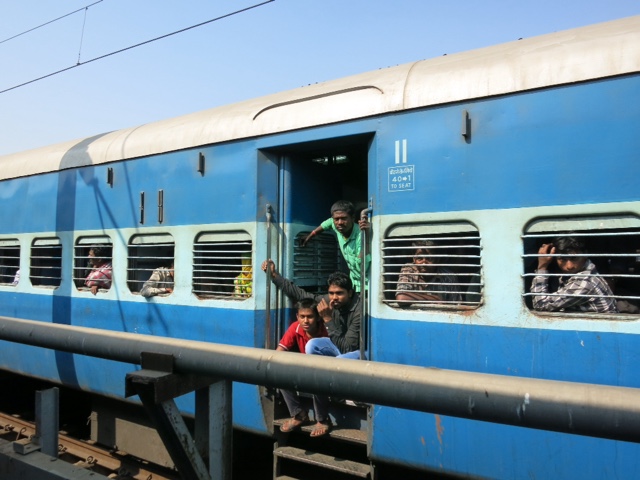
Desde Mumbay, tomamos un tren con destino a Goa, destino turístico para locales como extranjeros cuando de playa se trata. Fue un viaje de 12 horas en tren, donde nos la pasamos durmiendo, o leyendo, o tomando té con leche de los vendedores que se paseaban cada 15 minutos por los pasillos del tren. Después de 10 horas de viaje aprox ya estaba cansada, lo único que quería era llegar y bajarme del tren, respirar aire puro, estirar mis piernas, intente descansar un poco recostándome en mi litera que quedaba en la parte baja, cuando de repente veo dos sombritas de algo que corre debajo de mi asiento, y todas las personas que estaban sentadas frente a mí levantan las piernas y pegan un grito de susto, eran dos ratones que estaban persiguiéndose entre sí, y recorrían el pasillo del vagón de extremo a extremo haciendo que de rato en rato todos levantemos los pies en sobresalto para que no nos caminaran encima. A mí claramente se me quito el sueño, preferí quedarme despierta y alerta hasta llegar a nuestra parada. 


After watching the sun set over the Arabian Sea, joined by thousands of Mumbaikars, we strolled to the Mumbai inner city in search of a beer. Although beer can be found all over the place, there is usually a choice between posh night clubs, stiff clubs or restaurants or the rather gloomy drinking holes with mainly male public. We walked through the arty streets with boutique cafes and along the Mumbai stock exchange where apart from Indian listed stock prices things like cardamom indices figured on the billboard. We settled for one of the less grubby drinking holes with a few plates of food. The next day we had a whole day of southbound train riding ahead leaving Mumbai for the legendary beaches of Goa. A train coach is a microcosmos of itself and a 12 hour ride gives you all the time to absorb this little world, it's people and its relations, apart from reading, sleeping, drinking tea and trying different foods. The waggling of the train was lulling me asleep when a shriek brought me back to this world. Belen had detected 2 little mice that were soon the focal point of the entire coach. Every time the mice approached, feet went up on the benches and then back down again. After a few rounds of the mice and great excitment in the coach an old man seated in front of Belen said "Ma'am, they are looking for their seat" upon which the public burst into laughter and so we continued south.