miércoles, 22 de febrero de 2017

Ahmedabad, About Gandhi and Muslim heritage


We left Udaipur, sadly enough in a 4 hour bus instead of the 12 hour narrow gauge train which I would have loved, but a bit short on time to get to Mumbai. I must admit i was impressed by the quality and service of the bus but it won't change my mind. We then arrived in Ahmedabad, capital of Gujarat, off the tourist path and suddenly treated more gently, generous and fair by all locals alike. Ahmedabad has a wealth of ancient Islamic architecture and urbanization with an important Muslim population that still worships in century old mosques. As I would read later, the city was also the scene of one of Indian's contemporary history's worst pogroms when the Hindu nationalists butchered and burned around 3000 Muslims as recent as 1991, leaving many more roofless and destroyed , while police stood by. The responsables  of the violence which was politically motivated and supported (the killers had electoral lists with names and addresses of the Muslim population) have never been properly tried and convicted and counts among them the then Gujarat governor and now president, Narendra Modi. For me Ahmedabad was a representation of the ancient orient though and I marveled at the tombs, the bazaars and the mosques. We also came to the breaking point in going local with the food (as in Indonesia with the meatballs) after having been very cautious for a few days slowly but prudently trying new food, we dived in head first in a small local tandoori restaurant in the Muslim neighborhood, where we had chicken and naan from a searing hot wood fired tandoor or clay oven.


Después de nuestra visita a la ciudad romántica de India (Udaipur), tomamos un bus con destino a Ahmedabad. Fueron 4 horas de camino, en las que atravesamos pueblos muy pobres, pude observar construcciones muy rudimentarias, gente en las calles, sentados y durmiendo al lado de la ruta. El camino era pavimentado pero algunas veces se convertía en un camino de tierra que levantaba polvo a nuestro paso. Gente buscando algo que pudiera servir entre la basura, gente bañándose con baldes al lado de la ruta, gente lavando ropa en la calle obteniendo agua de pozos comunes, de pronto el tránsito se vuelve más lento, miro por mi ventana y veo unos cuantos camellos cargados con monturas y telas de colores que andaban por el carril del costado. 
Llegamos a Ahmedabad pasado el medio día, tomamos el típico tuk tuk para que nos acercara a nuestro hotel, nos vimos en medio de un embudo en el tráfico, entre motos, autos, bicicletas y otros tuk tuk, luchando todos por esquivarse entre sí y ganar unos metros en el carril. 
Llegamos a nuestro hospedaje, desempacamos y fuimos a conocer el Ashram de Gandhi, casa donde Gandhi vivió por más de 11 años, albergó a muchos seguidores y dio techo y comida a muchos indigentes y Dalit (los de la casta más baja, los que nadie defiende y nadie da ni un centavo por ellos). Gandhi además de luchar por la independencia de India, promovía la igualdad y pedía la eliminación de ese sistema de castas en el que los Dalit son los más marginados y castigados socialmente. 
Actualmente el Ashram es un museo, en el que puedes recorrer los jardines, pasillos, habitaciones donde dormía Gandhi, habitaciones de sus invitados y patios interiores. 


The absolute down point of the Ahmedabad experience was a visit with Belen to the local hospital for severe abdominal pain and fearing something like an appendicitis. While the hospital was OK, not topnotch, and the service absolutely outstanding (we were assigned a translator and steward) and the result turned out to be nothing severe, probably a stretched or torn abdominal muscle, getting to a hospital in a faraway country is always a bit of a traumatic experience. Especially the decision making process whether to go or not, full of fears and uncertainties, and then walking into this strange and not very joyful environment is quite cumbersome. Relieved that nothing serious was going on and after a long morning in the hospital, we decided for a fancy lunch of Gujarat cuisine in the local heritage hotel. The difference between regular day to day "staple" food in the popular street restaurants and these slightly more upscale restaurants, which we only enter if attended by a decent crowd of more affluent locals, is that the food instead of very tasteful but strongly flavored is an exquisite balance of the most delicate flavors and fragrances, subtle and rounded  and capturing both the exoticism as the finesse of the orient in a mouthful. In short, the best Indian lunch we had had so far.


Al salir del Ashram, nos vimos en un paradero de buses donde no era muy claro que bus tomar para regresar a la zona de nuestro hospedaje. Frente al paradero aparece un grupo de perros enfurecidos, ladrando especialmente hacia un perro que iba caminando en medio de los dos carriles de la calle. El perro era flaco, sin pelos en algunas partes del cuerpo, heridas, caminaba como cojeando de una pata, e iba botando espuma blanca por el hocico. Era un perro con rabia claramente, y los otros perros lo estaban espantando. Yo rápidamente busque hacia dónde debía correr en caso el perro cruzara la calle hacia nosotros, pero eso no sucedió ya que antes de que el perro se acerque, nos vimos sentados en un tuk tuk con un muchacho que se ofreció a llevarnos a la zona donde estábamos quedándonos ya que según el, le quedaba camino a donde él debía ir. Una vez ya montados en el tuk tuk nos dimos cuenta que el chico tenía que ir en otra dirección y que solo estaba en ese tuk tuk para llevarnos a nuestro hospedaje, quizá vio  nuestra cara de susto al ver el perro rabioso (que de verdad daba miedo) o quizá nos vio preocupados preguntando en el paradero por el bus que debíamos tomar... Y se apiadó de nosotros. Llegamos al lugar donde quedaba nuestro hospedaje, no dejo que paguemos la carrera y nos pidió que cualquier cosa que necesitemos lo contactemos. Nosotros le agradecimos el buen gesto y nos dirigimos a caminar por un bazar donde vendían de todo, y luego terminamos en una zona de musulmanes donde nos sentamos en un restaurante a comer pollo y panes al tandor (es un horno de barro, típico en la India). 


We spent our afternoon resting and wandering through the old quarter and to the mosques that dot this part of town. Most temples, whatever their religion, invoke something of peace, quietness, contemplation and reflection, but my favorites are the mosques where the usual open and airy design, the vast open clean floors and the water basins create an oasis where one (often) as a non Muslim can come and pass time to think, to read, to relax or to sleep, and so we spent a few hours watching children fly their kites, elderly people nap and chat and the locals coming in and washing their feet and face for Friday prayers. In the evening, I visited a lively night market to witness the closing of the gates. While the Mughals were ruling in this part of India and the city was flourishing, every night the gates to the safety of the walled city would be closed. If one was out of the city, farming, hunting, or whatever and the gates closed a long night full of uncertainties would wait and as such the closing of the gates was announced by the beating of the drums. This profession has been passed over from father to son for many generations and I sat down in the small quarters above the gate to see them preparing their drums and drumsticks while sipping tea. Once they started I wandered down through the back alleys and sat down next to one of the tombs of an ancient Mughal ruler and listened to the drums. I closed my eyes and imagined how the rush around the gates must have looked like, what it would feel like to punch my heels in my horse urging it to speed up to the city or what it would feel like when the drumming ceased and you knew you were in for a long, lonesome and uncertain night outside of the gates. It was one of these beautiful moments where the right conditions and the power of the mind coincide with Einsteins relativity of time and transport you to the ancient empires.


Como ya he mencionado en blog anteriores, mientras viajas pasas todo tipo de experiencia... Pasas por circunstancias de plena felicidad, pero también pasas por momentos en los que tienes que enfrentar temores (y aprender a superarlos), momentos incómodos, momentos de incertidumbre... Etc, y al final el conjunto de todos estos momentos le dan el sentido a tu viaje. Una de las preocupaciones que la mayoría de gente tiene esta relacionado al tema de la salud. Y nosotros la verdad es que hemos gozado de salud, por ahí una que otra gripe, infección del estomago, pero nada grave. En Ahmedabad, después de comer en la zona musulmán nuestro pollo y panes al tandor, empecé con un dolor leve en la zona abdominal, justo debajo de mi costilla derecha. El dolor fue incrementando durante la noche, al punto de que a la mañana siguiente sentía un punzón al respirar, y ni qué decir cuando quería caminar, no podía ni pararme, me dolía muchísimo. Con Johan nos preocupamos de que pudiese tratarse de una apendicitis o algo complicado, por lo que salimos, paramos un tuk tuk y fuimos directo al hospital. Ni que decirles del viaje en el tuk tuk con todos los baches, yo me retorcía de dolor con cada salto que dábamos. Llegamos al hospital donde había gente por todos lados, en los pasillos camillas con gente durmiendo, otras camillas con heridos esperando ser trasladados a una habitación. Al ser extranjeros nos pusieron un traductor y acompañante que estuvo con nosotros todo el tiempo que permanecimos en el hospital. El doctor al revisarme, me presiona la zona adolorida, y claramente yo pegue un grito de dolor que hice saltar d susto al doctor, y me envió a sacar ecografias y análisis de sangre, además de pedir que me pongan una inyección para calmar el dolor. De pronto me vi sentada en una silla de ruedas, Johan a un lado, el traductor al otro lado y un enfermero que me llevaba a la sala de "emergencias". Atravesamos los pasillos, todos los enfermos y accidentados fijaban su vista en mi. Se abren las puertas de la sala de emergencias donde estaban interviniendo a personas accidentadas, reviviendo a un anciano totalmente ensangrentado, todos en una sala común, una cama al lado de la otra sin ninguna separación. Mis nervios empezaron a incrementarse cuando veo que todos los doctores (alrededor de 20 y todos hombres, solo 2 mujeres eran enfermeras) fijan sus ojos en la extranjera que acababa de ingresar con cara de dolor y tocándose el abdomen (es decir, a mí). Todos empiezan a hablar en Hindi, a ponerse guantes nuevos, a sacar agujas y jeringas a preparar remedios... Yo rompí en llanto. No quería que nadie me toque, y menos al ver a tanto hombre junto mirándome fijamente. Con lágrimas en los ojos pedí a Johan que no se vaya y miraba a las enfermeras como para que se queden a mi lado... Una de ellas me sonrió, y se puso a mi lado, fue quien me saco las muestras de sangre, me puso la medicina intravenosa, y tomo mis datos. Al final, de todos los exámenes los resultados dieron negativos a una apendicitis y se trataba sólo de un estiramiento muscular en la zona del abdomen, producto quizás del estrés al inicio del viaje por India, o quizá el peso de la mochila, o algún movimiento o esfuerzo que hice y me lesioné el músculo lateral. Pastillas y descanso fue la orden del doctor. 


One of the many great things in India is that train stations have rooms which, provided you have a ticket, you can book in order to sleep during a long wait, have a shower or spend the night before an excruciatingly early train and so we found ourselves settling in the microcosmos of the Ahmedabad train station for a bed and a plate of food. Lulled asleep by the metal to metal clicking of incoming and outgoing trains, and occasionally woken up by the blaze of a horn, we got a few hours of sleep before boarding an early morning train towards Mumbai where apart from a buzzing metropolis a good friend would be waiting for us.


Después de salir del hospital, nos dirigimos a comer algo a un restaurante un poco más caro de lo que usualmente frecuentamos, pero queríamos ir a un lugar donde poder relajarnos después de haber pasado esas horas de estrés en el hospital. La comida estuvo demasiado buena, la palabra deliciosa queda corta. Luego visitamos algunas mezquitas, nos sentamos a ver la gente pasar, niños correr por los patios interiores, mujeres sentadas en los espacios abiertos rezando el Quran, y nosotros un par de intrusos ahí sentados observando a nuestro alrededor y disfrutando de un poco de paz. Es curioso, pero de todos los lugares religiosos (me refiero a templos donde la gente va a rezar) en los que encuentro más tranquilidad y paz es en las mezquitas. Los templos Hindu a veces son muy recargados y coloridos y la gente está haciendo siempre rituales y cantando y hablando... No es fácil sentir calma y paz. En los templo budista por lo general en los alrededores están las habitaciones de los Monge y ellos a su vez paseándose, en el interior imágenes y estatuas del Buda, todo adornado en rojo y dorado, bastante llamativo! En las iglesias cristianas / católicas también encuentro que algunas son bastante pomposas y recargadas, no necesitamos tanto lujo para rezar. En cambio las mezquitas, son espacios abiertos, pasillos en los que la gente puede sentarse cómodamente en el piso a descansar, leer, dormir si quieres y nadie te va decir nada... Claro, al momento de rezar, hombres y mujeres lo hacen en espacios separados, pero el ambiente es más simple, sencillo, agradable igual. Ahmedabad, sin duda me dejo memorias que nunca olvidaré, y también me hizo reflexionar, valore mucho más haber gozado de salud todo este tiempo, agradecí haber contado con los recursos para poder acudir a un doctor cuando en la vida me enferme (aquí en India para muchas personas eso es imposible), agradecí por todos los cuidados que mi papa me dio en el transcurso de la vida mientras viví con el (en Ahmedabad, vi mucha gente en la calle que literalmente... No poseían nada más que una frazada y unos cartones que usaban como colchón).
A veces nos quejamos de las cosas que tenemos, y no las sabemos valorar hasta que ves a otros que sobreviven el día a día,  luchan constantemente por tener un espacio donde dormir en la calle y buscan restos de comida entre la basura para tener algo que llevarse a la boca. 


lunes, 6 de febrero de 2017

Udaipur, The Romantic City of India


Udaipur, also called the romantic city of India for being a domestic honeymoon destination, is one of Rajastans main tourist cities, dotted with palaces and around a lake. We arrived early morning and got into a rickshaw towards our hotel which had already been reserved. First, upon asking to drop us of at the footbridge, a major landmark of Udaipur, the driver indicated he didn't know what it was. Then, indicating the name of our hotel we got on our way only to be dropped of at another street where someone was guiding us to the hotel but which I was sure wasn't ours because I was following my map. I then threatened not to pay if I was not taken to my hotel and we were on our way again. When finally close we got out and decided to walk the last bit to the hotel, where the manager received us. Ten minutes later, the manager called us and asked to help him with a rickshaw driver asking a commission, which I flatly refused. After having read the same story over and over again on the internet I was in between annoyed and amused that the same trick is still being played. I also thought how Internet has changed traveling again, easy online booking, fixed prices, worldwide free detailed maps.


Y llegamos a Udaipur, apenas salimos de la estación de trenes nos dimos cuenta que estaba recién amaneciendo por lo que decidimos tomar un tuk tuk lo más rápido posible para llegar a nuestro hospedaje. Al inicio el señor del tuk tuk se hacía el que no conocía el lugar donde pedíamos que nos llevara y luego de discutir precios accedió. Cuando de pronto nuestro tuk tuk frena, no lo hace donde habíamos pedido, y nos pide que bajemos del tuk tuk que si queríamos un hotel, ahí había uno, a lo que Johan indignado porque ya sospechábamos que algo así podía pasar, le responde que nos lleve a donde habíamos pedido, de lo contrario nos bajaríamos y no pagaríamos nada. (Esto suele pasar en India, los choferes de taxi y tuk tuk se hacen los tontos llevándote a hoteles que no son los que tú haz indicado y con los que tienen pactada una comisión, y al pasajero le hacen creer que tu hotel está cerrado o que cambio de nombre). 


We walked around a bit in Udaipur which was a truly charming city, dominated by its lake and the exclusive hotel, former palace, drifting in the middle of the lake on an island. It was a nice city, cleaner and less hectic than Jaipur (still cows all over though), to walk around and take in the heritage of this city which once had been the stronghold of yet another Rajput dynasty. The next day we visited the Udaipur palace, a magnificent piece of luxury, with a fascinating audio guide. One of our favorite parts of the tour was the music court, with beautiful Indian Mughal architecture and shaded by trees, where the Raj and his court would come for music and diversion and where the audio guide had the option to listen to a few beautiful pieces of North Indian classical ragas. Another fact I learned and that I would later encounter all over India is the quantities of imported Belgian glass, in the form of chandeliers, mirrors or lamps, until finally a Delhi shop owner told me his father used to import Belgian mirrors because of their quality and had visited a Belgian glass blowing factory. A part of the guided circuit was interrupted by what seemed to be the cleaning up of an event, taking apart big stages, plying hundreds of tables, disarming wooden imitation temples and classical Indian structures, within the fort's grounds. When I enquired as to what had been going on, the girl at the reception told me "a wedding.......very rich people". I would later read that the upper class weddings are not so much about having fun but about 1) being able to seduce high ranked people (in politics, society, business) to attend and 2) to show how much money has been spent on the wedding, leading to some mind blowing extravagancies.


Dejando de lado la mala experiencia a nuestra llegada a Udaipur, la ciudad en sí es muy acogedora. A mí me encanto desde que salimos a dar un paseo por los alrededores de nuestro hospedaje. Es una ciudad turística pero sin embargo no la sientes colapsada. Es de calles estrechas, casas con balcones, lleno cafés y restaurantes ... Y un lago que le da el toque especial. Es aquí donde vienen la mayoría de parejas de recién casados (Hindu) a pasar su luna de miel. 
De noche se iluminan los hoteles al pie del lago, el Palacio Real, se ve preciosa la ciudad. 
Las vacas y toros no pueden dejar de ser mencionados, estan por todos lados del mismo modo que en Jaipur y Delhi, lo que sí, algunos toros son un poco agresivos diría yo, ya que andan por la calle acercándose a la gente bruscamente e intentando cornear al que se cruce, a lo que los locales responden con un salto de susto y otros agarrando un palo y tratando de espantarlos.
Fuimos a conocer el Palacio Real, donde con el uso del audio guía lo recorrimos entero, pasando por patios interiores con jardines y bancas de mármol, habitaciones y salones con vitrales espectaculares, no tenemos fotos del palacio por dentro porque no era permitido, pero si algunas fotos desde el otro lado del río. 


On our second day in Udaipur, we took a bus to Chittorgarh, another walled city, including fortresses and temples, somewhere in Rajasthan. Here we started to figure out one of the nice things which for me makes India qualify as an easy "travalable" country; there is always a bus which is coming or leaving soon, takes you where you need to go, is cheap and finally is full of entertainment. The same can be said for restaurants, hotels, taxis etc., in India there is always an option. The fortress, or better said walled city, is an impressive, huge construction surrounded by 16 km thick heavy walls on a rocky outcrop in the middle of the Rajasthani desert and includes a variety of buildings ranging from Royal palaces with horse and elephant stables, to temples, to water reservoirs and defensive towers and gates, making it a fascinating though tiring day walk from construction to construction. Not being (and undeservedly) a western tourist highlight, the area was packed with local tourists and we were the subject of many curious stares, many giggles and smiles, pictures and questions and finally arriving and sitting down in a temple garden where local families finished there picnics, a grateful drop off point for all the leftovers. After a few questions and pictures we were left with good blessings and 2 newspapers on the ground in front of us full with food, so we started eating. When we got our Indian visa in Hanoi, the clerk in the consulate said (jokingly) that Belen seemed Indian. Arriving in India, we heard the same statement again and again. While we were eating one bystander came for a bit of chit chat and again said Belen looked Indian, upon which she replied she was from Peru. While Belen was talking to some women, the guy approached me again and said very seriously that Belen in another birth ( in a previous life as Hindus believe in reincarnation) must have been an Indian women. He seemed genuinely convinced.


A 80 km de la cuidad de Udaipur, queda Chittogarh a donde llegamos haciendo uso de un bus local y luego un tuk tuk. Es un complejo de Templos, Palacios, Torres, Establos... Una reserva de agua protegida por una gran muralla. Éramos los únicos turistas, por lo que llamamos un poco la atención, el que menos volteaba a vernos y nos inspeccionaban de pies a cabeza (literalmente). Al finalizar nuestra caminata, decidimos descansar un rato bajo la sombra que nos daba las paredes altas de un templo, al lado teníamos un jardín donde algunas familias estaban haciendo picnic. De pronto se acerca una familia en su mayoría mujeres (solo el padre era hombre) y empiezan a conversarnos y preguntar de dónde éramos, a lo que cuando menciono que era de Perú, ellos sorprendidos y muy en serio me dicen que pensaban que yo era de India, que quizá en la otra vida fue de la India, pero que en esta nací en Perú, pero que igual yo era Hindu. Finalmente compartieron su comida con nosotros, entre panes con curry, unos dulces típicos de la India y mandarinas. Nos pidieron sacarnos fotos y por 5 minutos nos sentimos estrellas de Bollywood mientras el grupo de gente se iba incrementando para sacarnos foto selfie con sus celulares. Yo aproveché y me saque una foto con dos que se me pegaron y no me soltaban, me hablaban en Hindi a lo que yo sin entender les respondía en inglés y ellas solo se reían. Lo único que entendí a una en su inglés masticado fue: "You are my sister" mientras me ponía el brazo alrededor del cuello para tomarnos una foto. 


The last temple we visited was a Jain temple, which to me was an unknown religion. The Jains recognize the Hindu gods (and are often considered some sort of Hindus) but are committed to no violence including against the smallest animals which makes them vegatarian, but also makes them (the orthodox ones at least) sweep the floor in front of where they walk fearing to step upon animals, using masks in order not to swallow flies and not eat anything what grows underground due to the possibility of killing worms. The Jains have several sub streams, one of them, the so called "sky clad" Jains, known for their gurus not having clothes and being dressed in the sky, so upon entering the temple I found myself surrounded by cheap framed prints of naked old men squatting. The lay Jains in many areas of India though, are part of the business elite and are in their majority rather wealthy people.


Había escuchado sobre los matrimonios arreglados en India, pero era algo tan ajeno para mí y poco probable de que hasta el día de hoy existiese... que la verdad, no lo creía hasta que conversamos con Vicky, el manager del hostel donde nos estábamos quedando en Udaipur. Vicky es un chico de 29 años que había estado ahorrando los últimos años de trabajo para poder ir a Alemania a visitar a un viejo amigo que vive allá, cuando de pronto recibe la carta de migraciones donde se le niega la Visa. Cuando empezamos a investigar un poco sobre que pudo haber estado mal en los formularios y documentos que él había presentado, nos percatamos de que para poder ingresar a Alemania le pedían una serie de documentos y papeles que aseguren su regreso, como por ejemplo poseer propiedades o un contrato de trabajo, a lo que él responde que no tenía ninguna de esas pruebas, no poseía una casa o inmueble y a pesar de estar trabajando 7 años para el mismo hostel, no contaba con ninguna especie de contrato formal. Cuando le preguntamos qué otro motivo podría ser útil para que el volviera a India, nos dice que el próximo año en diciembre se iba casar, a lo que yo emocionada le digo: "Oh! Te vas a casar?! Felicidades! Cómo no empezaste por ahí? Eso es un buen motivo para que regreses, es tan simple como que demuestres fotos tuyas y de tu novia juntos, o algo que demuestre la historia entre ustedes y los planes de casarse". A lo que él me responde: "Pero cómo voy a hacer eso? Ella ni siquiera tiene pasaporte, ni siquiera debe tener carnet de identidad, es de un pueblito chico lejos de aquí, y nuestros padres han arreglado para que nos casemos, yo solo la he ido a conocer una vez y cuando fui ella fue muy tímida y se escondió, nunca hemos hablado, ahí no hay ninguna relación ni fotos que demuestren una historia de amor". Primero pensé que era broma, y le dije muy estúpidamente: "No... Me estás bromeando", y el muy serio y desilusionado me dice: "Es verdad, así es en India... Aquí no es como en sus países". 
Sentí mucha lastima por Vicky, primero porque le negaron la Visa y se lo que se siente que te cierren las puertas de un país al que quieres ir y conocer, y el que te nieguen la entrada significa poner fin a tus sueños e ilusiones. Segundo por el esfuerzo económico que había hecho por tramitar la visa y comprar pasajes anticipados, dinero que para él significó probablemente años de ahorro que nadie se los devolvería. Y por último que aún existan ese tipo de matrimonio "arreglado" y que no tengas la plena libertad de elegir tu mismo a quien querrás de compañero por el resto de la vida. 


Our hotel was managed by Vikram, a 29 year old, cheerful Indian, original from a Rajasthani village but due to good English and people skills with a stable and responsible (though 250 USD a month) job. He planned on traveling to Germany to visit one of his longtime friends, and had made a visa application backed by a certificate of guarantee of his German friend and emitted by a German municipality. When we arrived in the hostel the first day he was all over excited and nervous about the outcome of the visa which should be there soon. The third day though he was down and sad, his visa being refused. Having been through the same with Belen's Australian visa, I decided to try and help him and investigated the channels and clauses of appeal which could be made against the refusal, the main reason for the refusal being that there was no evidence or sufficient guarantee to come back to India. Recalling our process for Belen in Australia and reading a bit on the web, I went with him through the options, but not having a working contract (although employed for 7 years), having no property on his name, having his marriage arranged with a girl of his rural native area but all paperless, I knew the chances would be slim for him to win the appeal or to get a second chance. When I told him this, he questioned sadly but without anger, why I could come to India without all these requirements and why he could not do the same to Europe, while he has a return plane ticket bought (with significant savings) and his boss expects him to start working again. We spent a significant amount of money on our visa adventure which didn't bankrupt us though after years of saving dollar salaries, while Vikram's visa application had cost him around 2 months salaries. What could I answer to this illustration of the unfairness of the world of the haves and have-nots?


Estuvimos tres días en Udaipur, una ciudad más tranquila y relajada en comparación con Delhi o Jaipur. Aquí disfrutamos de los atardeceres frente al lago, paseamos por la ciudad mil veces bordeando el lago y cruzando puentes. Celebramos una de nuestras citas a la luz de las velas en uno de los restaurantes mejor catalogados y donde solo ingresaban Hindu de buena facha y elegantes. Sin embargo uno de los momentos que más disfrute fue cuando me tocó compartir con la familia Hindu en los jardines de Chittogarh, que no andaban en traje ni mucho menos eran de la alta alcurnia, todo lo contrario, eran muy sencillos y de bajos recursos pero con un gran corazón y alegría que nos contagiaba. 
La última noche en Udaipur antes de dormir, agradecí por todo lo que tuve y tengo, por la oportunidad que se me está brindando de conocer tantos lugares, gente y costumbres diferentes, por las cosas que estoy aprendiendo en este viaje, y por las muestras de amabilidad y bondad que recibimos constantemente de extraños y hacen que nuestro viaje sea más ameno y llevadero. Porque viajar, no siempre es fácil... Hay momentos en los que te da nostalgia tu familia, amigos, no siempre encajas a la primera en la sociedad que estas visitando, te puede chocar ciertas costumbres y actitudes... Pero es ahí cuando de pronto recibes una sonrisa, muestras de empatía, curiosidad, generosidad (a todo eso yo decido llamarle "muestras de amor") de extraños, de gente que esta sentada al lado tuyo en el tren, de gente que vende cosas en un mercado, y es como te das ánimos de continuar y dejar de lado las malas experiencias y disfrutar del resto! 


sábado, 28 de enero de 2017

Jaipur, The Pink City


Another long expected moment in our travels was taking a train in India. We had an online ticket with only a print screen of the confirmation, so we decided to arrive well ahead of time in the station and check out what trains and stations in India were all about. If Angkor Wat is a busy place than an Indian train station is overcrowded, capturing many faces of Indian society as well as many facets of time. You could sit an entire day in the station watching people and what they do, this off course if you don't mind being looked at. It took me a while to get used to the staring gaze of people, and while we (western societies and most others I know) usually turn our eyes away when direct eye contact is made, our Indian fellow will just continue the stare almost piercing you. A comfortable train drive though took us to Jaipur, where getting off the train we were immediately surrounded by a mob of rickshaw drivers. We had heard the stories and read the tips on the web, but still we were surprised by this overwhelming wave off people and as such decided, in some sort of a panic reaction, to walk to our hostel which was roughly a kilometer away. Used to NZ and AUS and then to the omnipresent safety of south east Asia, where we walked anywhere, anytime, we soon found out that walking around at midnight in an Indian city was not the best thing to do. After dodging legs of sleeping people and puddles of piss, we were being harassed by a rickshaw driver to the point of being aggressive and we were delighted to find the gate of our guesthouse open and unlocked. We both fell down on the bed and pledged to take a rickshaw the next time.


Después de Delhi, decidimos empezar con nuestra exploración por India y tomamos un tren con destino a Jaipur. Llegamos a la estación de trenes donde nos mareamos y sentimos totalmente desorientados con la cantidad de gente que había, en las escaleras subiendo y bajando, en los pasillos, en los andenes, otros sentados en el piso, vendedores de te, vendedores de café, vendedores de galletas a base de garbanzos, cargadores de costales, mujeres y sus vestidos de colores, niños corriendo descalzos, perros durmiendo debajo de los asientos, muchos trenes estacionados y nosotros sin entender cómo funcionaba el sistema, cuando vemos a un tipo pegando en las puertas de los vagones una especie de listas, donde figuraban todos los nombres de los pasajeros y debías buscarte en ese listado para saber qué vagón y que asiento te tocaba. Para ser nuestro primer viaje en tren estuvo bien, era de los más modernos que hemos tomado, de dos pisos, asiento acolchados y moderadamente limpio... Por lo que el viaje se pasó rápido y sin darnos cuenta ya estábamos en Jaipur, a donde llegamos pasadas las 11 pm y nos sorprendió la cantidad de gente que aún había en la calle. Nuestro hospedaje según la aplicación de mapas, indicaba que estábamos a tan solo 700 metros, de modo que decidimos caminar, pero no fue la mejor decisión. Ya habíamos caminado más de 7 cuadras y aún no llegábamos al hospedaje, caminamos bordeando una rotonda y ya las calles parecían cada vez menos iluminadas, yo empecé a agilizar el paso. Pasando la rotonda, habían estacionados unos tipos en un Tuk Tuk, que empezaron a preguntarnos si queríamos tomar una carrera a lo que respondimos que no, y seguimos caminando, y ellos empezaron a seguirnos en su tuk tuk (habían tres hombres dentro) a preguntarnos si queríamos "fumar", a lo que también respondimos no, y seguimos caminando sin mirarlos. Yo me percaté de que uno de ellos no se encontraba en sus 5 sentidos, parecía borracho o derogado, los ojos como desorbitados, por lo que me asuste y dije a Johan que se apure que esos tipos no me gustaban nada. Por fin estábamos doblando en la calle donde quedaba nuestro  hospedaje, cuando otra vez aparece el tuk tuk y se pone al lado de nosotros, empiezan a hablarnos en inglés incoherencias y se reían entre ellos... Nosotros sin voltear caminamos directo al hospedaje que ya habíamos visto el cartel, llegamos a la puerta, empuje la reja con todas mis fuerzas y entramos y cerramos la reja para que no intentarán ingresar. Una vez en nuestra habitación después de hacer el check in, respiramos aliviados de que estábamos a salvo. 
Fue el día que más rece y me encomendé en el transcurso del viaje. En realidad, en India he vuelto a rezar y creer que hay alguien que me protege siempre.


The following morning I had an early one and went in search of a working ATM. After walking around 7 km and 2 hours I had seen goats, donkeys, cows, elephants, monkeys and camels in the relatively quiet morning streets but, with only the equivalent of 7 USD in rupees in my pocket, no ATM. I picked Belen up in the guesthouse and decided to go for a bank to try and change money, to no avail, but finally, again after dodging droppings, spit, motorcycles and cows, found a money exchange office with terrible rates (read at least 10%) but in a market of offer and demand, this appeared to be the equilibrium price. Relieved by having cash again, we decided to celebrate and went to an old colonial hotel for a quiet and tranquil breakfast in a garden setting. Enjoying our coffee, I understood how a British colonial must have enjoyed his havens of peace and tranquility, in this country full of colors, smells, noises and people. After a proper breakfast, we got into the Jaipur bazaars, constructed as part of the organized city plan (one of the first in India) and organized per trade or speciality and as such we walked through the motor cycle bazar and the printer bazar (what centuries ago might have been a bullock cart and paint bazar) to reach the bazaar with textiles and clothes. Wandering through these bazaars reminded me of the Arab souks, and again reminded me how much Arabian and Persian influence can be found in this part of India. 


El día siguiente, salimos con Johan en busca de un cajero para poder retirar algo de efectivo y tener cash. Con el cambio de moneda, había escasez de dinero en los cajeros y teníamos en la billetera el equivalente a 7 dólares americanos, era súper difícil encontrar un cajero con dinero, y si es que había te encontrabas con una fila de gente interminable, y por otro lado, las casas de cambio tampoco tenían dinero. El estrés empezó a apoderarse de nosotros, y después de dar vueltas por todo el centro de Jaipur, finalmente vimos una casa de cambio de donde entraba y salía gente, cruzamos la calle esquivando vacas, motos, buses y subimos rápido las escaleras adelantando a otros turistas que también estaban llegando. Por fin logramos cambiar algo de dinero que nos alcanzaría por lo menos para los siguientes 3 días. Algo era algo. Saliendo de la casa de cambio fuimos a tomar desayuno a una cafetería de un hotel estilo francés, que nos había recomendado una señora que conocimos saliendo de la casa de cambio. El restaurante era en medio de los jardines del hotel, pulcro, flores por todos lados, tranquilo, te sentías en paz, la mayoría eran turistas y alguno que otro Hindu adinerado. Mientras tomaba mi café, me percaté que en la mesa siguiente había un chica Hindu de aproximadamente mi edad, por lo que se me ocurrió acercarme a su mesa y comentarle lo que me había pasado en Delhi, que más de una vez algunos hombres habían puesto sus manos donde no debían y que yo ahora me sentía muy incomoda e insegura de andar por la calle, ella me dijo que lamentablemente como en todos lados hay hombres así, irrespetuosos, pero que debía reaccionar, decirles en voz alta "Dont touch me" o "Keep your hands Away" llamando la atención de la gente de alrededor, que ella estaba segura que me iban a ayudar, ya que ahora hay mucha campaña y comunicación que promueve el respeto y la no violencia hacia la mujer. 


After an intense few hours walking through bazaar India and having over saturated our senses we ended up at the Jama Mahal, or wind palace, an exquisite piece of Moghul architecture, from where women could witness without being seen, chitchat and observe daily life on the Jaipur streets. The next visit took us to the first of many palaces we would see in India and was an eye opener for me, because I learned that apart from the 3 great empires ruling pre-colonial India (the Buddhist with Ashoka, the Gupta dynasty and then the moguls), India has consisted of hundred of independent states ruled by monarchs, rajas, nizams, etc and that India has always been relatively divided, along language and culture lines but also along local political lines. These dynasties rivaled each other for territory and power and made an broke alliances. Legend goes that one of the rulers of Jaipur would let his white horse loose and once it crossed in rival territory, the latter would be attacked and conquered. The Jaipur Royal palace, where today's dynasty still lives, was open for visit but was slightly disappointing as it was more a museum holding textiles and the Raj his polo shirts, than impressing oriental architecture. The palace was guarded by Rajput guards in full ornate with turbans, swords and white costumes and I was also introduced to the concept of a handlebar mustache, trademark of the Rajputs. The Rajputs are a relatively high on the echelon Rajasthani warrior caste, but at that stage I wasn't grasping the caste system yet. Exiting the fort we passed by what seemed to be a big event and we couldn't resist peeking through the castle gates, seeing big luxury cars, women in expensive saris clad in gold, traditional Rajput guards and waiters and adorned elephants. Upon asking, this proved to be one of the extravagant Indian wedding scenes we would see in the coming days, where no imagination was too big and no fortune too small to surprise and impress guests (and non guests).


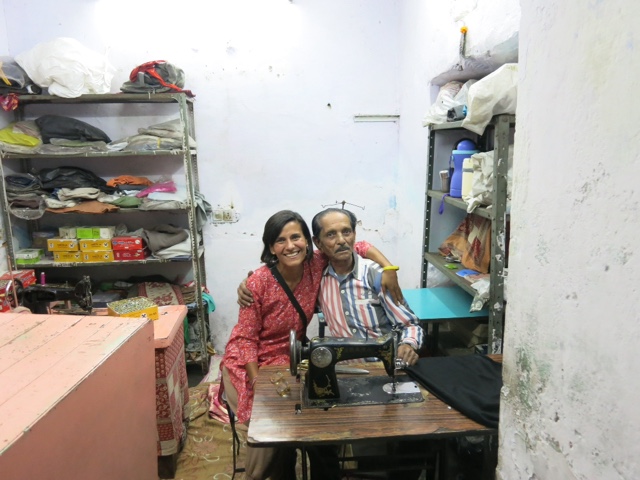
En Jaipur fuimos a conocer los bazares (típicos mercados) donde encontrabas desde túnicas, vestidos de seda, pantalones, zapatos, vestidos estilo musulmán, bufandas, pañuelos, etc. Y bueno ya que estábamos ahí, aproveche y me compre un par de túnicas que me cubrían rodillas, brazos y codos, eran sueltas y frescas. Había leído que por lo general los hombres ven a las extranjeras como "mujeres fáciles" a menos que te vean usando ropa típica de la India, lo que indica que tienes respeto por su cultura, y en respuesta ellos también muestran respeto hacia ti. No lo dude, y me compre túnicas y pantalones nuevos, que además me hicieron unos ajuste en la talla con el costurero del mercado, un viejito amable y entusiasmado de tener turistas en su local nos pidió que nos tomáramos fotos con él y nos hizo prometerle que le enviaríamos una copia de la foto. Con la adquisición de túnicas y pantalones nuevos, desde ese día, no volvieron a ponerme un dedo encima. Incluso varios me confundían con Hindu. 
Después de recorrer los bazares y galerías, fuimos a visitar el palacio de las 1000 ventanas, realmente una construcción con una arquitectura impresionante... Un palacio en color rosado pastel, con pequeños balconcitos y ventanas desde donde se supone las mujeres que vivían en el palacio podían ver hacia el exterior sin ser vistas. Era a través de estas ventanas la única manera de que podían enterarse que ocurría afuera. Otra de las visitas que hicimos fue al Palacio Real, donde hasta el día de hoy vive el Raj, su esposa y la princesa quien se encarga de administrar el museo que hay dentro del palacio. Nos llamó mucho la atención la cantidad de guardias que había en cada puerta, bien vestidos con sus trajes impecables, sus turbantes en la cabeza, y los bigotes largos y ensortijados. Al salir del palacio nos percatamos de la cantidad de gente que iba llegando en autos y limosinas, se trataba de una boda de algún millonario que había arrendado el patio interior del palacio y un par de elefantes que ingresaban al palacio cargando a los novios. Es aquí cuando te das cuenta de la tremenda brecha que existe entre las clases sociales en India, hay gente con muchísimo dinero capaces de arrendar Palacios y elefantes para una fiesta, mientras otros no tienen techo para dormir y están tapados con frazadas en los estacionamientos de los trenes o simplemente ahí en la calle. 


During these first few days in north India, Belen had a few incidents with hands grabbing in the busy streets where they shouldn't grab. This obviously created an uncomfortable sense of insecurity and unease, and having talked to a few Indian young ladies and Internet blogs, we applied various tactics one of them being the Indian dress code. So in the evening we got back into the bazaar, for tunic and Indian clothes shopping using our bargaining skills. We got Belen a few new outfits which, with a few gold bracelets and bells, would have made the Rani (or queen) look bleak. 


The next day, with precaution but without being intimidated, we took the local bus, which was not as packed as we dreaded, to the Amber fort. When the bus got out out of the valley, the sight of the fort, high on the rocks, with impressive defensive works, in the desert was jaw dropping. In the cool season of the year, under a blistering sun, we climbed the walls and had a fascinating audio guided tour of this landmark, describing the history of the dynasties as well as the daily life at the court. Though substantial reservoirs catches rainwater to provide for the fort and the surrounding city, the site was eventually abandoned for today's Jaipur due to the lack of reliable water sources. Another 30 minutes walking took us to the garrison looking down on the fort from where we had an amazing 360 view of the Rajasthani desert and surrounding buildings. As a funny anecdote, we decided we would not climb up to the fort on an elephants back, based on the stories we had read of poor treatment of the animals, only to find out that my mum 35 years ago had made the same trip on the back of an elephant. Happy, but tired by the dust and sun, we made a last walk through Jaipurs bazaar, had dinner and headed for the train station to catch our train to Udaipur.


A 16 km de la ciudad de Jaipur quedaba el Fuerte de Amber, por lo que temprano decidimos tomar un bus local y en el transcurso nos cruzamos con elefantes pintados de colores en la ruta.  Al llegar al fuerte también habían elefantes decorados y pintados, que los usaban para transportar a algunos turistas que no querían subir el fuerte caminando. Nosotros decidimos subir el fuerte caminando, no soy muy partidaria de las técnicas de adiestramiento que usan con estos animales. Una vez dentro del fuerte, teníamos una vista espectacular de los reservorios de agua, de todas las murallas que protegían la ciudad amurallada, en el fondo las casitas en el pueblo donde alguna vez vivió gente, ahora parecían todas abandonadas. Nos recorrimos el fuerte entero, guiados por un audio guía, que nos iba indicando la ruta en el interior del fuerte. La arquitectura realmente maravillosa, lleno de pasillos secretos, salones, patios interiores, balcones, ventanas secretas que parecían de espionaje, terrazas, jardines. Muros en mármol y otros con incrustación de espejos y piedras preciosas. Una maravilla! Un lujo. 


This time, the train would be a night train and we were anxious to find out how this experience would be. The station where we had first arrived and hustled with rickshaw drivers, was still extremely dirty and slightly intimidating, with hundreds of people sitting and sleeping on the platforms with piles of luggage. We sat down on our packs and started reading our books, which was rather difficult, as every 5 minutes somebody would stand 2 meters in front of us and stare at us for minutes without interruption. When the gaze started being a bit uncomfortable, I would look up and stare back, expecting the usual western reaction of diverting the gaze. Nevertheless, this was not the case and a staring into the eyes contest would start which I would quickly loose. This was one of the things to get used to and the unease quickly disappeared and became amusement. As our travels continued, I found this (amusement) one of the better travel attitudes in India. One can be disgusted by a garbage eating cow shitting in front of your hotels doorstep or amused. One can be angry about someone jumping the queue at a counter sticking money through and shouting what he needs, or one can be amused and do the same. One can be frustrated by yet another full metro arriving on the platform, or one can be amused by the man squeezing in at all cost only to have his handlebar mustache almost between he door. One can feel resentment when the chai vendor charges you double, or one can reply with amusement that you are not as stupid as you look like and have a witty smile and a cheaper chai in return. The environment stays the same, the experience just becomes much better. As a golden rule, when you return the stares with a quick typical Indian head wiggle, almost every face quickly converts in a big smile. The head wiggle, by the way is not just a left to right head tilting, but requires the mastering of a complex balance between left and right and a slightly forward motion, describing a tilted 8. But practice makes perfect, and practice is abundant as it is a brilliant pastime here in India.


Termino nuestra visita en Jaipur y una vez más nos vimos en una estación de trenes para subir al tren que nos llevaría a nuestro siguiente destino: Udaipur. Llegamos a la estación de trenes y el escenario era el mismo, gente caminando en todas direcciones, subiendo y bajando escaleras, otros sentados en el piso, otros durmiendo en el piso. Ubicamos nuestro anden y lanzamos nuestras mochilas al piso y nos sentamos sobre ellas mientras esperábamos a que llegara nuestro tren. Si vienes a India a relajarte o querer estar solo, definitivamente estás en el lugar incorrecto. Siempre, siempre hay gente a tu alrededor, la palabra "privacidad" deja de existir en tu vocabulario una vez que pones los pies en India. Aún no acostumbrados a tener tanta gente rodeándonos, tuvimos que aprender a lidiar con las miradas penetrantes de los Hindu. Algunos pareciera que vieran un fantasma cuando te miran, te quedan viendo con los ojos totalmente abiertos como asombrados, otros te quedan examinando de arriba a abajo como si vieran un extraterrestre. Y están los que te ven y simplemente no te quitan la mirada de encima nunca más, esos a mí me ponían incomoda, ya con las experiencias en Delhi y Jaipur, la verdad no me sentía muy tranquila con que ahora me quedaran mirando fijamente a los ojos, casi intimidando. Al inicio esquivaba la mirada, pero sentía que era como mostrarme débil y no me gustaba, por lo que después empecé a mantener el contacto visual por unos segundos y luego voltearles la cara, hasta que leí en un libro que una de las formas que usan los hombres para identificar a una prostituta es justo eso, quedar mirándolas fijamente a los ojos... Y si ellas les mantienen la mirada, es porque son correspondidos. Desde que leí eso, evite cualquier contacto visual con el sexo opuesto... Al menos por el norte de India, el sur es otra cosa!


The train ride itself was in sleeper class, which is third class non AC, with the typical fellow passenger as the lower middle class Indian, men, groups of women and families, with a few words of English, a lot of curiosity and generally very accommodating. Though this time we boarded a train which was on route and already half full in the dark, and got into the packed wagon trying to find our berths between packs, sleeping bodies, standing bodies and hanging legs. Once we found our space, we weren't sure what to do with the luggage as we were on upper berths and leaving the bags under the lower berths without locks didn't seem a good idea, so I got into my berth in between the 2 big packs. We took the non AC car, because our good Spanish friends traveling in the August heat, had suggested us to avoid AC cars overnight as they get ice cold. We didn't think about the fact that we were now in winter in a Rajasthani desert in a non AC car, where the windows didn't close, whereas the AC cars had closed windows and the AC switched of. Needless to say that in a dark, new, freezing cold environment between my packs and a casual curious stare, this first night train experience wasn't the best, but anyway we arrived safe and sound in Udaipur, the romantic city...


Jaipur, fue una mezcla de emociones. Nos maravillamos con el fuerte de Amber, me dio mucha lastima ver tanta pobreza en las calles, pasamos susto el primer día, pero también nos dieron muestras de amabilidad por ejemplo el viejito que me arreglo los pantalones nos dio consejos y advertencias sobre la ciudad y otro viejito que me arreglo el cierre de mi cartera que se había roto, y no quiso aceptar que le pagáramos. Y es así como empecé a tomar una lección de cada lugar que visitó en India, en Jaipur me di cuenta que no puedo juzgar a todos con la misma vara, así como hay gente mala también hay gente buena y con buenas intenciones que merecen una oportunidad antes de ser juzgados negativamente.